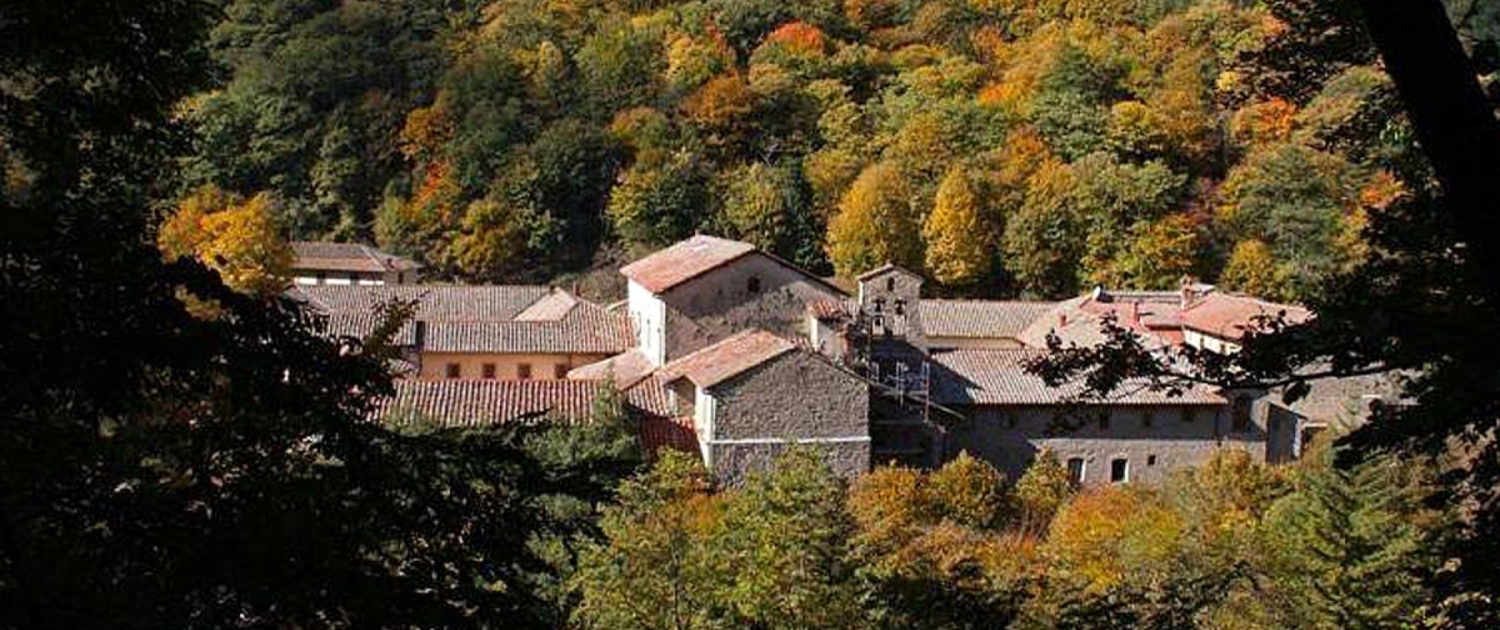
Hermitage of Camaldoli
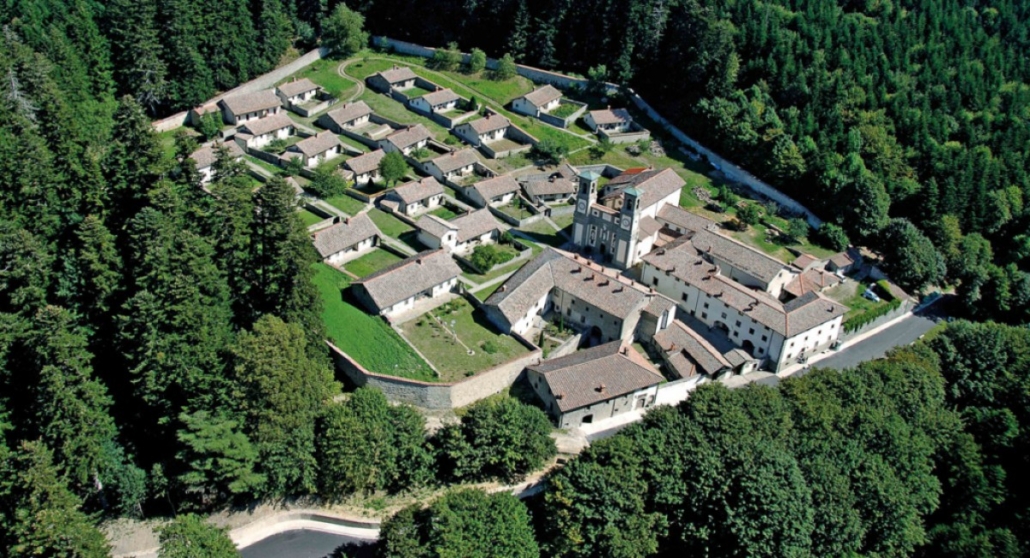
The Hermitage of Camaldoli and the nearby monastery form a unique religious complex, nestled in the forests of the Tuscan-Romagnol Apennines.
According to tradition, Saint Romuald arrived here around 1004. The forest, stretching as far as the eye could see, seemed to him the ideal place to establish a community of hermits. The Bishop of Arezzo donated the land to him and, in 1027, Romuald built the first five hermit cells and a chapel dedicated to the Holy Saviour.
Further down the valley, in a place known as Fontebona, there was a hospice for pilgrims founded by the monks of Badia Prataglia. The saint reorganised it and, in 1080, the monastery was built on the site.
The Hermit Cells and the Church
The cells are where the hermits spend much of their day, devoting themselves to study, work and prayer. They are located beyond the gate marking the enclosed monastic area. The only cell open to visitors is Saint Romuald’s cell, which can be accessed from the square in front of the church.
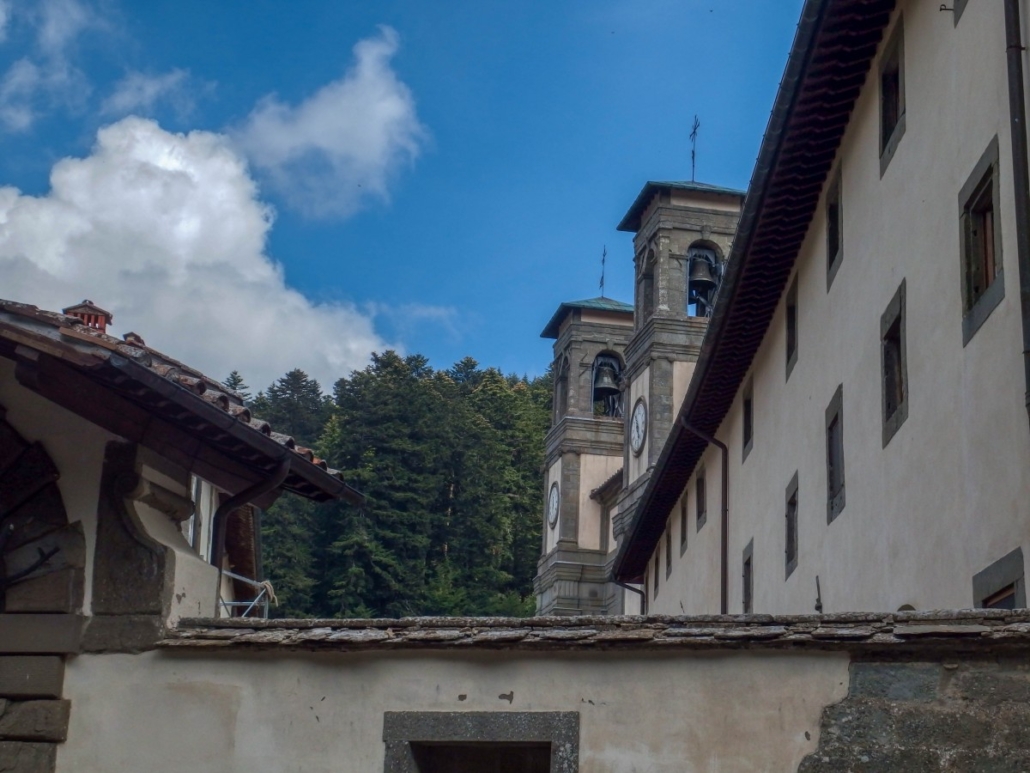
The present church stands on the site of the original oratory, retaining its dedication and central position within the layout of the hermitage.
The original church was destroyed by fire in 1203 and rebuilt in medieval style in 1220. It was subsequently reconstructed in the 16th century and renovated between 1772 and 1776.
The Historic Pharmacy
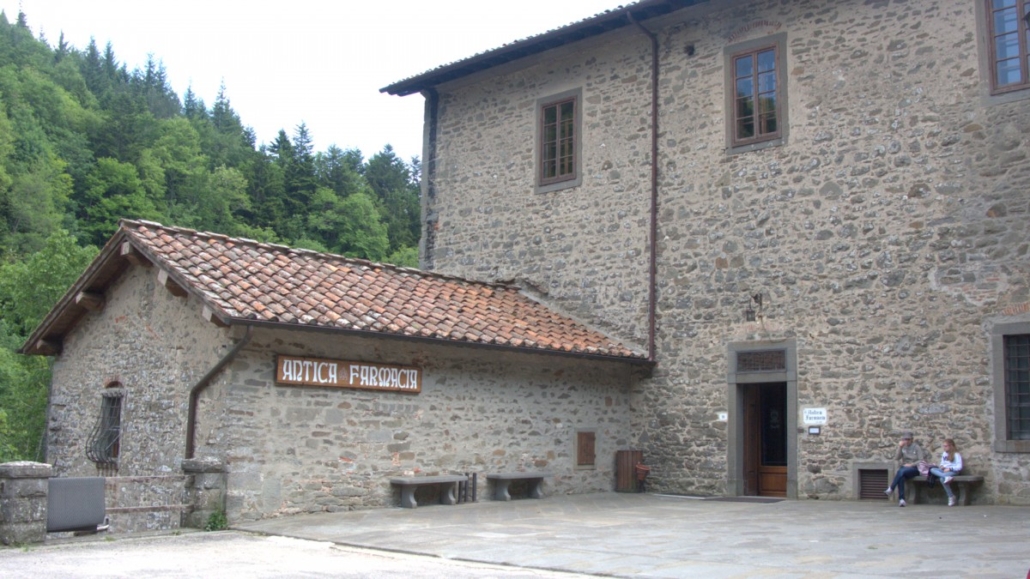
The Historic Pharmacy of Camaldoli was built in 1523 and forms part of the ancient hospital, which dates back to 1048. It preserves carved walnut furnishings and ceramics from the 16th and 18th centuries.
An adjoining room houses a traditional apothecary laboratory with ancient stone mortars, presses, illustrated herbal recipe books, a distillery for aromatic liqueurs and a collection of preserved exotic animals.
The Guesthouse
The Guesthouse is the oldest building in the religious complex and originally served as a hospice for pilgrims. It includes the cloister through which visitors enter the monastery and the remains of the Chapel of the Holy Spirit.
Further Information: Camaldoli Community | Hermitage of Camaldoli