Pieve Santo Stefano
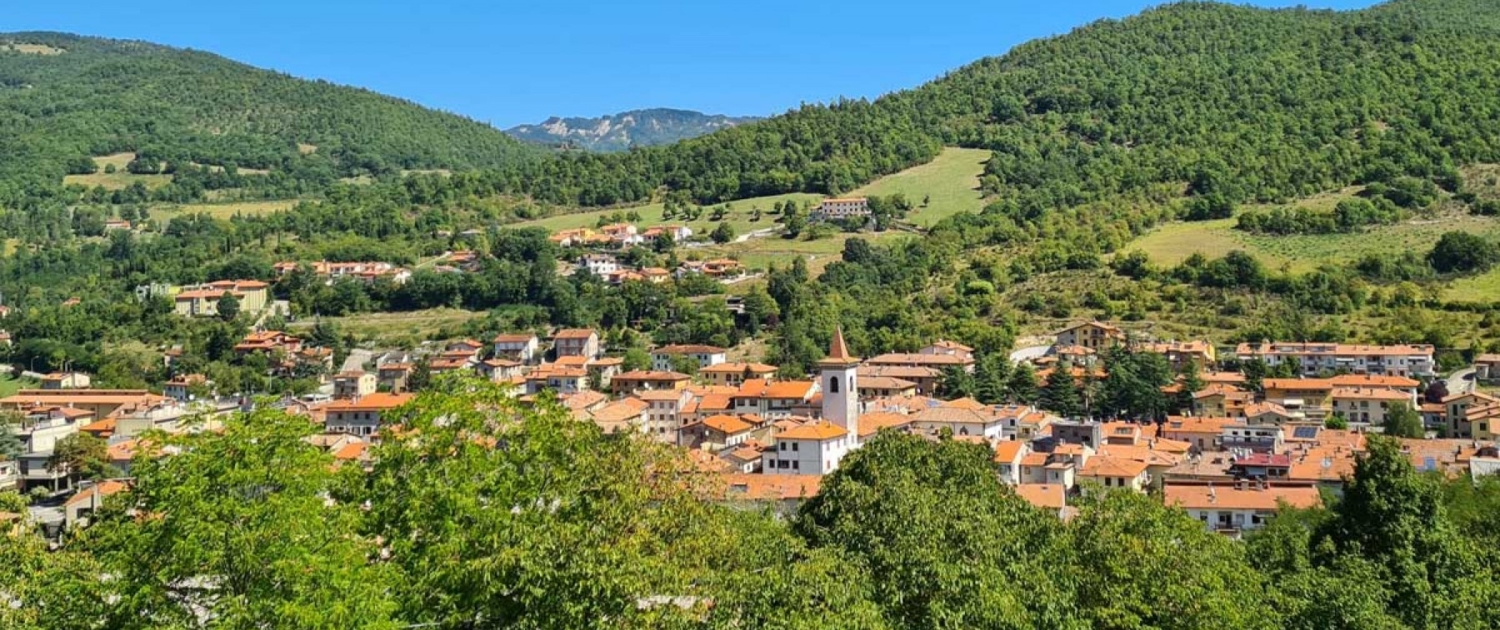
Pieve Santo Stefano is a Tuscan village with ancient origins. Neolithic artefacts and Roman remains have been discovered in the surrounding area, including the ruins of bridges that once crossed the Tiber River.
Known as Suppetia during the Lombard period, Pieve Santo Stefano passed through a long succession of rulers before eventually coming under the control of Florence.
History and Artistic Heritage
The village reached its greatest splendour during the time of Lorenzo de’ Medici, known as Lorenzo the Magnificent, when works by renowned artists such as the Della Robbia family, Piero della Francesca and Ghirlandaio arrived in the town.
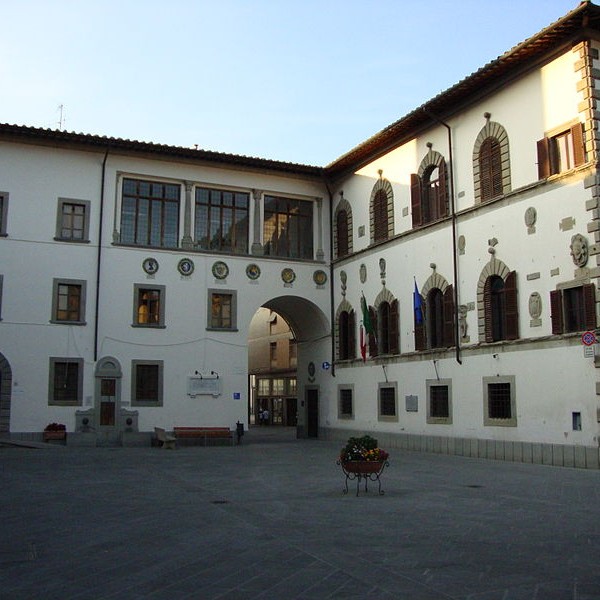
Many of these treasures, along with much of the historic architecture that once characterised the town centre, were lost as a result of devastating events. In particular, a flood in 1855 caused extensive damage, while in 1944 the historic centre was destroyed by retreating German troops. Only the town hall and the churches remained intact.
What to See in Pieve Santo Stefano
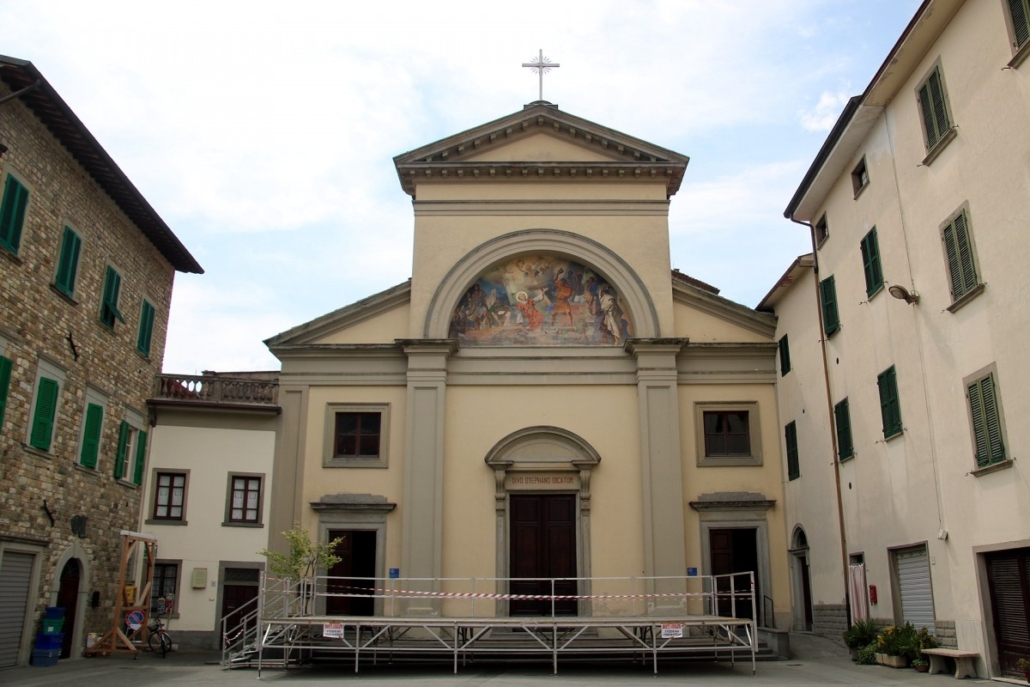
Collegiate Church of Santo Stefano
Built on the foundations of the ancient parish church from which the town takes its name, the Collegiate Church of Santo Stefano now features a Neo-Romanesque appearance and preserves valuable works from the Della Robbia workshop.
Temple of Santa Maria del Colledestro
Documented as early as the 12th century, the Temple of Santa Maria del Colledestro dates in its present form to the 18th century. This distinctive octagonal building stands on the site of an ancient pagan temple dedicated to the Tiber River and its nymphs, as evidenced by a Roman inscription discovered here in 1636.
The temple was also used as an architectural example in Piero della Francesca’s treatise De prospectiva pingendi.
Sanctuary of the Madonna dei Lumi
The Sanctuary of the Madonna dei Lumi dates back to the late 16th century and is characterised by its Greek-cross floor plan and elegant yet austere appearance.
Inside, visitors can admire several works of art, including the high altar, created by the Florentine sculptor Pietro Betti, and the fresco of the Madonna dei Lumi.
Further Information: Municipality of Pieve Santo Stefano | Pieve Santo Stefano Tourist Association