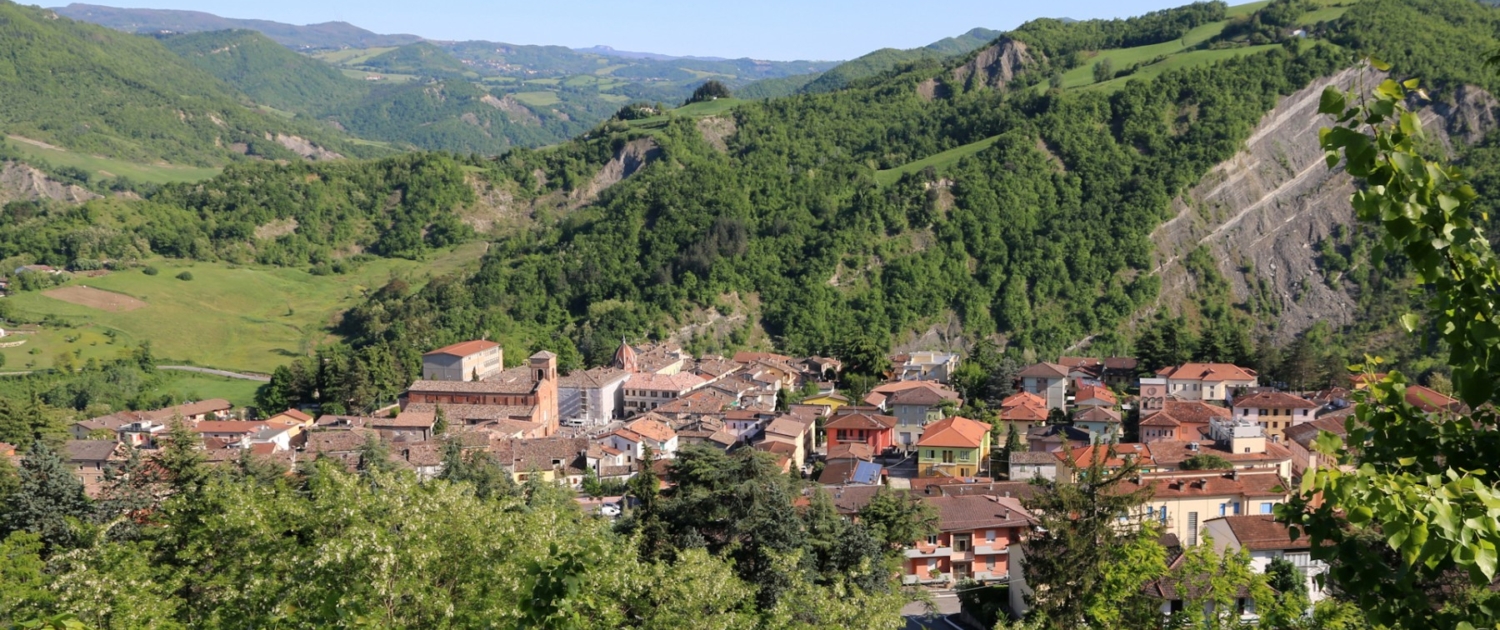
Sarsina
Sarsina has ancient origins. Founded by Umbrian populations between the 6th and 5th centuries BC, it was later conquered by the Romans, who granted it the status of a municipium.
The National Archaeological Museum of Sarsina, one of the most important museums for Roman heritage in central and northern Italy, houses extraordinary examples of architecture, sculpture and everyday objects.
The Town of Plautus
Sarsina is the birthplace of Plautus, one of the most important playwrights of antiquity. Every year, the town honours him with the Plautus Festival, an event dedicated to classical theatre, traditionally held between mid-July and mid-August, which has celebrated more than sixty editions.
Saint Vicinius and the Pilgrimage Route
The Saint Vicinius Way is a circular pilgrimage route starting and finishing in Sarsina, passing through places associated with the saint’s life and traditions.
According to tradition, Saint Vicinius arrived in Sarsina from Liguria around the 5th century AD and spent his life between the town and the surrounding hills, preaching the Gospel and devoting himself to poverty, prayer, vigils and fasting.
After being ordained bishop, he continued his ministry through prayer and fasting, invoking deliverance for those believed to be afflicted by demonic influences.
The Basilica and the Chain of Saint Vicinius
Devotion to the patron saint remains deeply rooted among the people of Sarsina. Saint Vicinius’ reputation as a miracle worker and deliverer has spread far beyond the local area, attracting pilgrims from all over Italy who visit Sarsina to receive a blessing with the distinctive chain, or collar, of Saint Vicinius.
The chain, whose shape also inspired the route of the Saint Vicinius Way, consists of two iron sections connected by a double joint and ending in two matching rings.
According to tradition, the saint used it as an instrument of penance. During prayer, he placed it around his neck and attached a heavy stone to it, forcing himself into an uncomfortable position and preventing himself from raising his gaze.
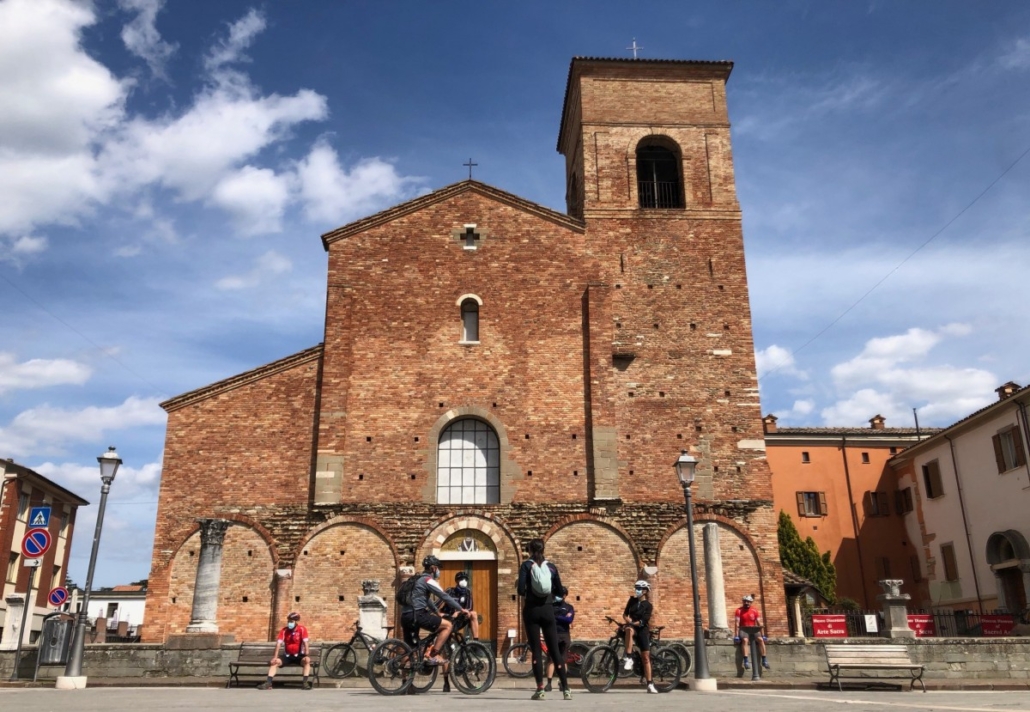
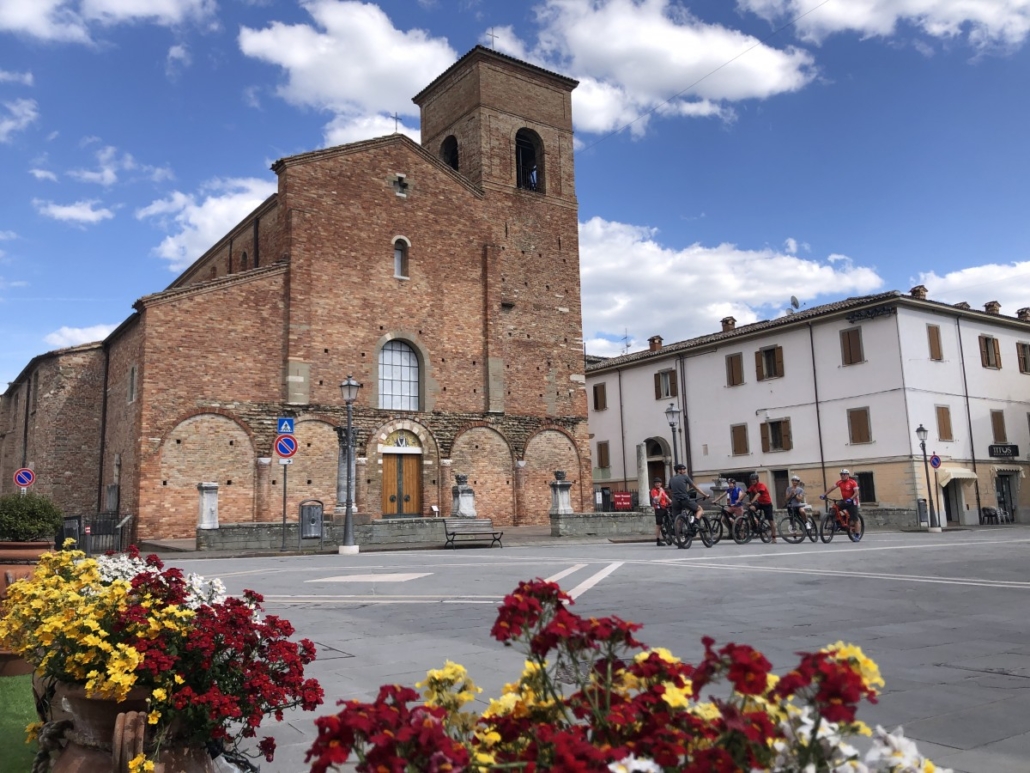
Preserved inside the Co-Cathedral Basilica of Saint Vicinius, it is venerated as a relic of the saint and used to invoke blessings and deliverance for the sick, as well as during prayers of exorcism.
Pilgrims are traditionally invited to venerate the relic by having it placed around their necks for a few moments, accompanied by an invocation to the saint.