

A route through the waterways, cultural traditions and ancient craftsmanship of the Apennines.
The Lakes and Ancient Crafts Tour is a 29 km circular route starting and finishing in Quarto, designed for those who wish to discover the artisanal and rural heritage of the Romagna Apennines through lakeside landscapes, ancient villages and traces of a past that shaped the lives of mountain communities.
This route combines nature, culture and heritage, making it ideal for families, cycle tourists and groups of friends.
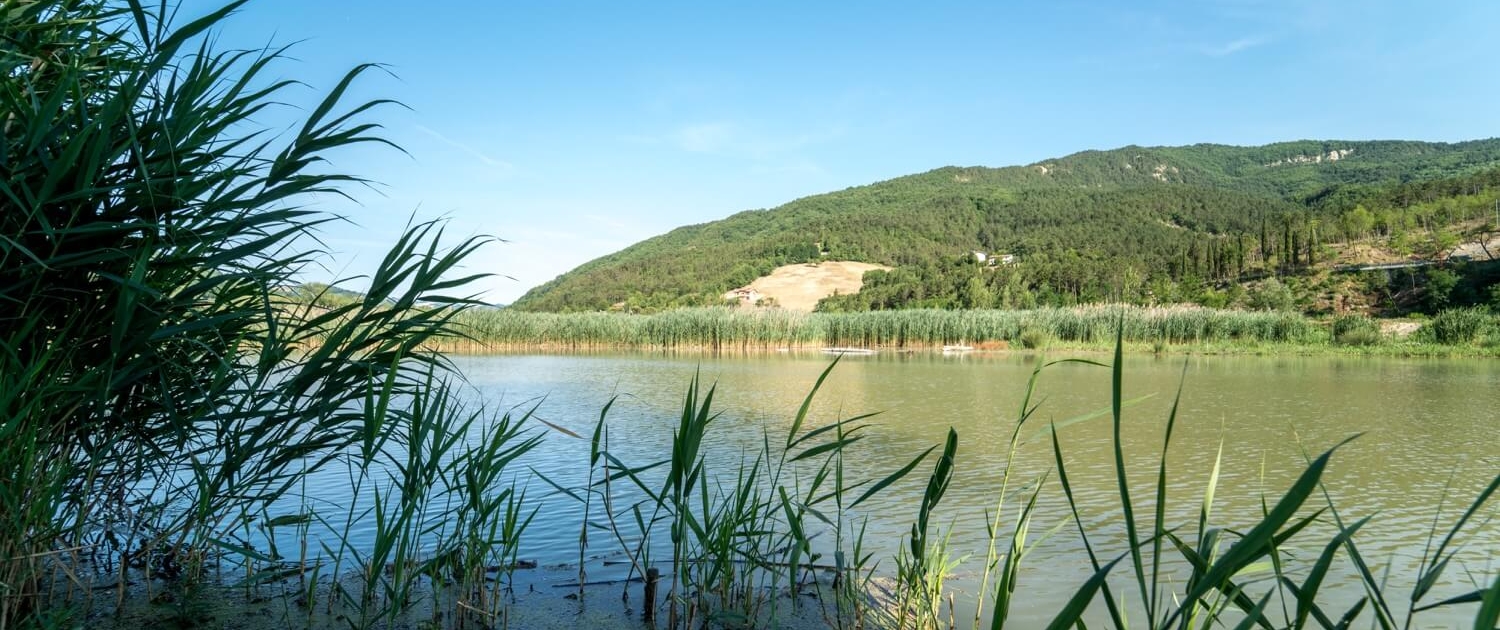
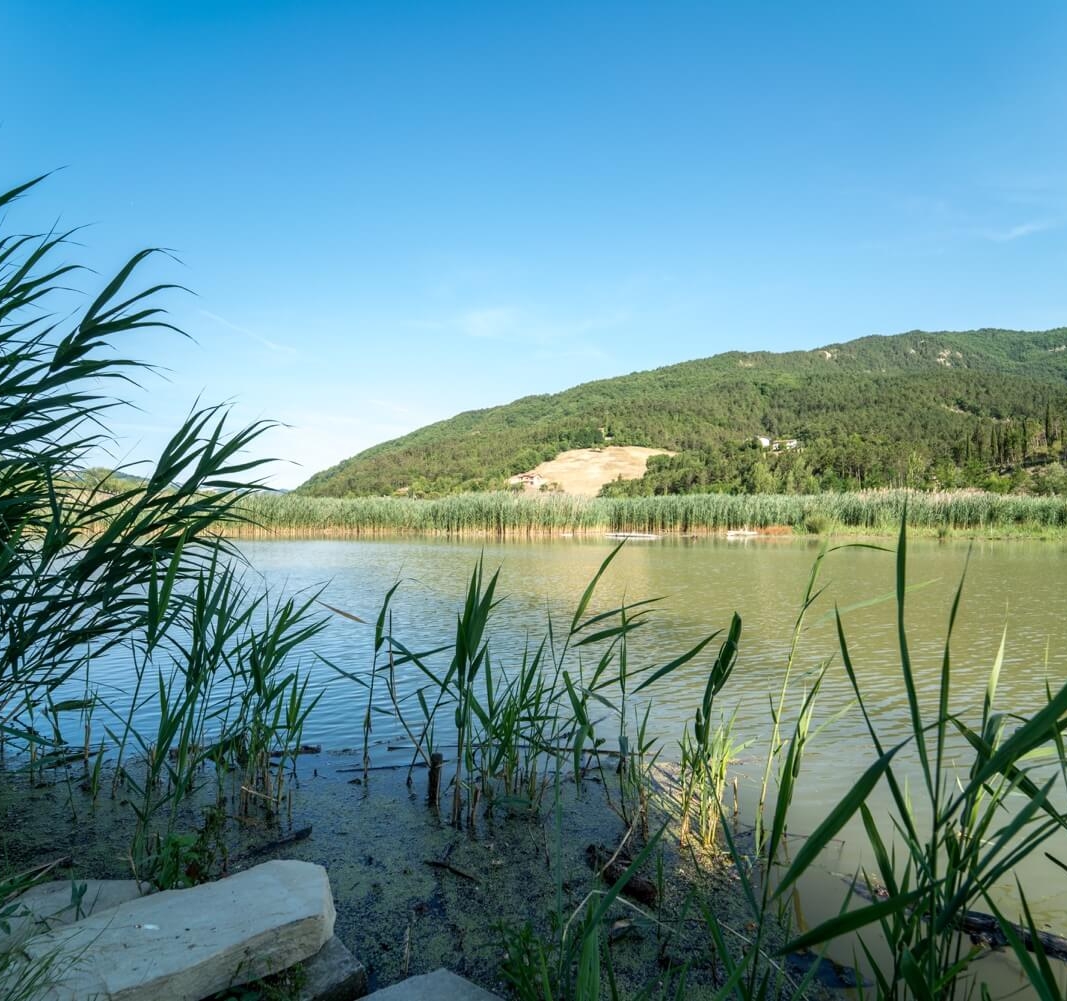
The tour starts in the village of Quarto, a small settlement nestled in the peaceful valley, where the landscape opens up towards the first highlight of the itinerary: Quarto Lake, the second-largest lake in Romagna. The lake is an artificial reservoir that formed following a landslide in 1812, which blocked the course of the Savio River. Crossing the dam that holds back its waters offers picturesque panoramic views, perfect for a break or a picnic. The lake is a popular destination for anglers and hikers and is one of the area’s most appreciated natural attractions.
From the lake, the route descends towards the hamlet along the Parà stream, a small settlement that preserves the atmosphere of rural Apennine villages, where water has always played a central role in everyday life. Mills, washhouses and small hydraulic structures tell the story of a past shaped by hard work and ingenuity.
The route then reaches Donicilio, in the municipality of Verghereto, passing through an area rich in history and traditions. Here, visitors encounter the ancient pietra serena sandstone quarries, one of the most valuable natural resources of the Romagna Apennines. For centuries, this compact yet easily workable stone was quarried by hand by skilled stonemasons, who used techniques passed down through generations to extract blocks for the construction of houses, bridges, churches and other structures. Pietra serena sandstone, with its distinctive blue-grey colour and durability, has shaped the architectural identity of the villages throughout the valley. Doorsteps, lintels, fountains, paving stones and decorative elements still bear witness to the patient craftsmanship and expertise of local artisans. Cycling past the old quarries means immersing yourself in a landscape that preserves the traces of an ancient craft, shaped by hard work, skill and a deep connection to the mountains.
Continuing along scenic roads, the route reaches Castel d’Alfero, in the municipality of Sarsina, an ancient medieval village, now abandoned, where time seems to have stood still. The silent stone houses tell the story of a community that once brought life to these mountain ridges. The small church overlooking the hill, together with the ruins of the houses and the deserted narrow streets, creates an atmosphere suspended in time. Castel d’Alfero is one of the many “ghost villages” of the Apennines, places that preserve the memory of mountain communities and offer picturesque views for those who enjoy exploring the region’s hidden history.
The tour continues towards Alfero, a lively village in the Apennines, within the municipality of Verghereto, known for some of the area’s most distinctive traditional events. Among these is the Bevimagnalonga, an annual event that attracts thousands of participants and celebrates local food, wine and conviviality. Equally famous is the Palio dei Somari (Donkey Race), traditionally held on the second Sunday of August. This historic and light-hearted festival is inspired by Siena’s famous Palio, but features a decidedly more unpredictable protagonist: the donkey. The often hilarious races attract spectators from across the region, turning the village into a lively celebration of local traditions and entertainment.
Alfero is also the gateway to the Alferello Waterfalls, one of the most picturesque natural attractions in the Apennines. Here, water, the connecting theme of the entire itinerary, leaves behind the stillness of the lakes and plunges dramatically among rocks and vegetation, creating a cool, wild setting that invites visitors to stop and explore.
After crossing Incisa Pass, the tour reaches the second major lake along the route: Acquapartita Lake, a popular destination for anglers, families and nature lovers. Its calm waters and surrounding woodlands create a peaceful and picturesque setting in every season, ideal for taking a break or enjoying a moment of quiet contemplation.
Passing through Selvapiana, the route begins its return towards Quarto. Selvapiana is a small hamlet surrounded by the greenery of the Romagna Apennines, nestled on Poggio delle Corsicchie along the hillside descending towards the Savio River. Surrounded by centuries-old chestnut groves, woodlands and farmland still cultivated according to local traditions, it retains an authentic and peaceful atmosphere. The chestnut groves tell the story of the central role chestnuts played in the lives of mountain communities for centuries. Chestnut flour, traditionally produced in the historic mills scattered throughout the valley, was long a precious and essential resource for the diet and economy of families living in the Apennines.
The return to Quarto completes an itinerary that brings together water, nature, ancient crafts and historic villages, offering a journey through the culture of the Romagna Apennines. It is a route that tells the story of local communities through their resources, landscapes and traditions.
READ MORE
This route combines nature, culture and heritage, making it ideal for families, cycle tourists and groups of friends.
The tour starts in the village of Quarto, a small settlement nestled in the peaceful valley, where the landscape opens up towards the first highlight of the itinerary: Quarto Lake, the second-largest lake in Romagna. The lake is an artificial reservoir that formed following a landslide in 1812, which blocked the course of the Savio River. Crossing the dam that holds back its waters offers picturesque panoramic views, perfect for a break or a picnic. The lake is a popular destination for anglers and hikers and is one of the area’s most appreciated natural attractions.
From the lake, the route descends towards the hamlet along the Parà stream, a small settlement that preserves the atmosphere of rural Apennine villages, where water has always played a central role in everyday life. Mills, washhouses and small hydraulic structures tell the story of a past shaped by hard work and ingenuity.
The route then reaches Donicilio, in the municipality of Verghereto, passing through an area rich in history and traditions. Here, visitors encounter the ancient pietra serena sandstone quarries, one of the most valuable natural resources of the Romagna Apennines. For centuries, this compact yet easily workable stone was quarried by hand by skilled stonemasons, who used techniques passed down through generations to extract blocks for the construction of houses, bridges, churches and other structures. Pietra serena sandstone, with its distinctive blue-grey colour and durability, has shaped the architectural identity of the villages throughout the valley. Doorsteps, lintels, fountains, paving stones and decorative elements still bear witness to the patient craftsmanship and expertise of local artisans. Cycling past the old quarries means immersing yourself in a landscape that preserves the traces of an ancient craft, shaped by hard work, skill and a deep connection to the mountains.
Continuing along scenic roads, the route reaches Castel d’Alfero, in the municipality of Sarsina, an ancient medieval village, now abandoned, where time seems to have stood still. The silent stone houses tell the story of a community that once brought life to these mountain ridges. The small church overlooking the hill, together with the ruins of the houses and the deserted narrow streets, creates an atmosphere suspended in time. Castel d’Alfero is one of the many “ghost villages” of the Apennines, places that preserve the memory of mountain communities and offer picturesque views for those who enjoy exploring the region’s hidden history.
The tour continues towards Alfero, a lively village in the Apennines, within the municipality of Verghereto, known for some of the area’s most distinctive traditional events. Among these is the Bevimagnalonga, an annual event that attracts thousands of participants and celebrates local food, wine and conviviality. Equally famous is the Palio dei Somari (Donkey Race), traditionally held on the second Sunday of August. This historic and light-hearted festival is inspired by Siena’s famous Palio, but features a decidedly more unpredictable protagonist: the donkey. The often hilarious races attract spectators from across the region, turning the village into a lively celebration of local traditions and entertainment.
Alfero is also the gateway to the Alferello Waterfalls, one of the most picturesque natural attractions in the Apennines. Here, water, the connecting theme of the entire itinerary, leaves behind the stillness of the lakes and plunges dramatically among rocks and vegetation, creating a cool, wild setting that invites visitors to stop and explore.
After crossing Incisa Pass, the tour reaches the second major lake along the route: Acquapartita Lake, a popular destination for anglers, families and nature lovers. Its calm waters and surrounding woodlands create a peaceful and picturesque setting in every season, ideal for taking a break or enjoying a moment of quiet contemplation.
Passing through Selvapiana, the route begins its return towards Quarto. Selvapiana is a small hamlet surrounded by the greenery of the Romagna Apennines, nestled on Poggio delle Corsicchie along the hillside descending towards the Savio River. Surrounded by centuries-old chestnut groves, woodlands and farmland still cultivated according to local traditions, it retains an authentic and peaceful atmosphere. The chestnut groves tell the story of the central role chestnuts played in the lives of mountain communities for centuries. Chestnut flour, traditionally produced in the historic mills scattered throughout the valley, was long a precious and essential resource for the diet and economy of families living in the Apennines.
The return to Quarto completes an itinerary that brings together water, nature, ancient crafts and historic villages, offering a journey through the culture of the Romagna Apennines. It is a route that tells the story of local communities through their resources, landscapes and traditions.
- Distance
- —
- Elevation gain
- —
- Elevation loss
- —
- Max elevation
- —
Key Features