

A journey through time, exploring Roman archaeology and centuries-old sacred heritage.
The Archaeological and Historic Churches Tour is a route that explores the rich history of the Savio Valley, connecting the Roman heritage of Sarsina with the medieval parish churches scattered throughout the Apennines.
A 29 km circular route combining quiet backroads, unpaved sections and panoramic views, ideal for those who enjoy cycling surrounded by nature while discovering places that tell stories spanning centuries.
The tour starts in the heart of Sarsina, the ancient Roman town of Sassina, once an important centre. Here stands the National Archaeological Museum, home to one of the richest collections of Roman artefacts in Emilia-Romagna: mosaics, funerary stelae, grave goods, inscriptions and the famous monuments from the Pian di Bezzo necropolis. It is the ideal place to discover the town’s history and understand its role along the route connecting Rimini to Rome.
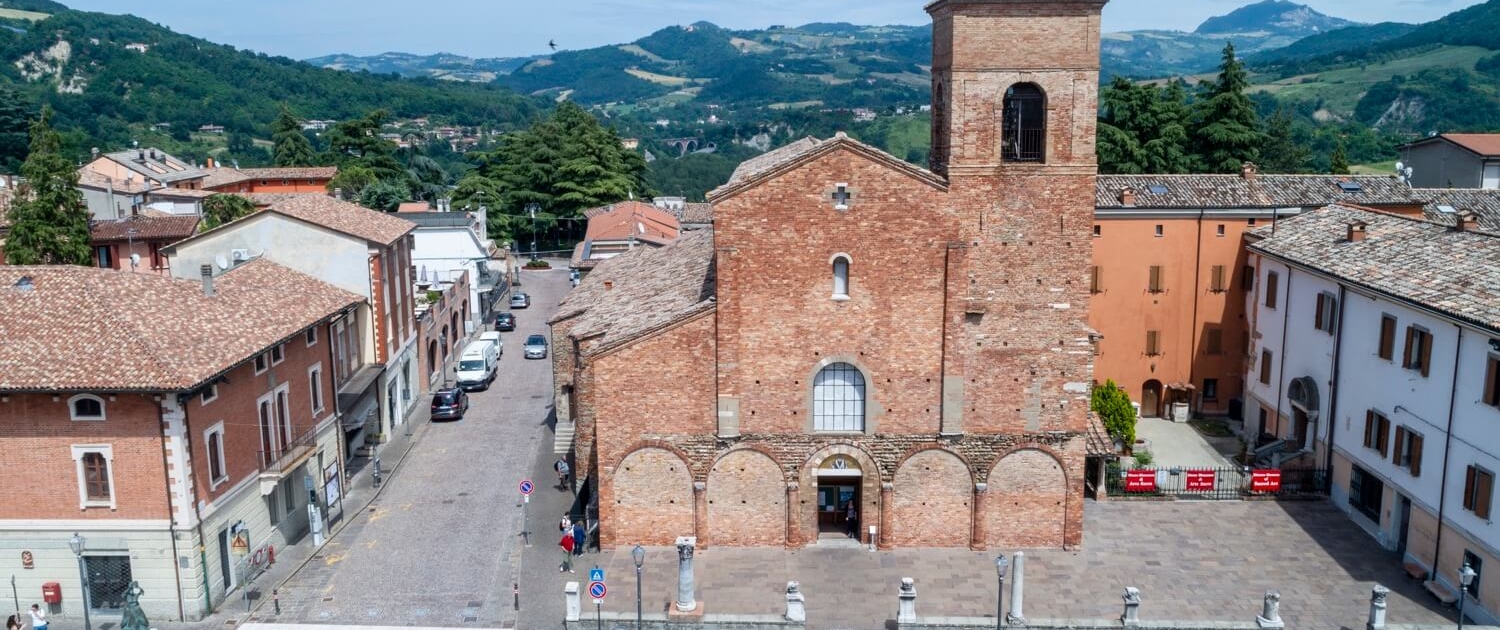
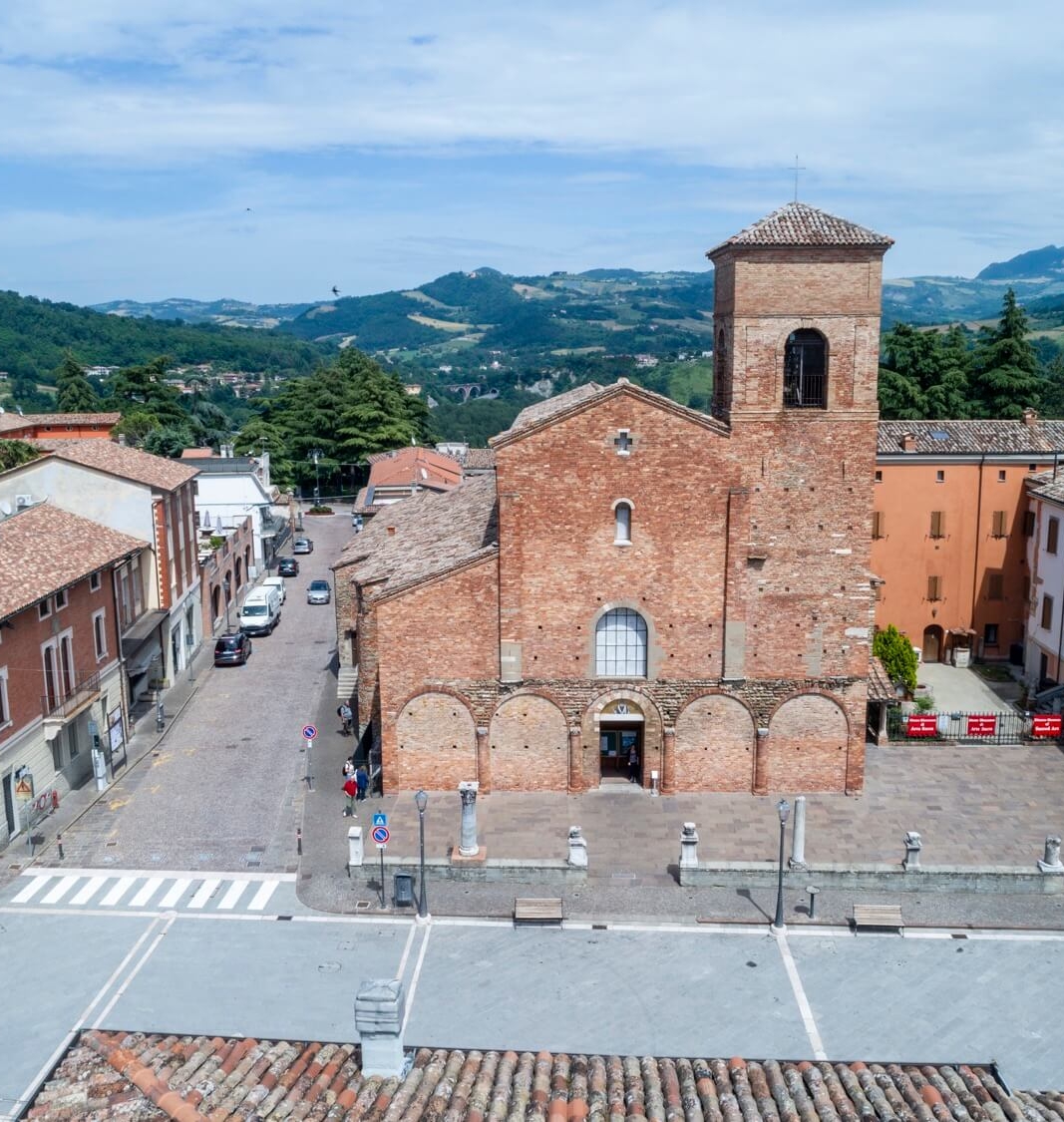
Next to the museum stands the Co-Cathedral Basilica of Santa Maria Annunziata, Sanctuary of Saint Vicinius, one of the spiritual landmarks of the Apennines. The basilica houses the relics of the miracle-working saint and the famous collar, still used today in the traditional blessing ritual. The cathedral is the spiritual heart of the Saint Vicinius Way, a pilgrimage route through nature and faith that crosses the entire valley.
Just outside the town centre, two remarkable reminders of the Roman presence can be found: the Mausoleum of Obulaccus, an impressive funerary monument erected in the 1st century BC by his son Oculatio in memory of his father Obulaccus, inspired by the famous Mausoleum at Halicarnassus, and the remains of the Capitolium, the temple dedicated to the Capitoline Triad. These sites offer a glimpse of a thriving, well-organised Roman town that played a central role in the surrounding territory.
Leaving Sarsina, the route heads towards Quarto, a small rural village at an altitude of 400 metres, marking the beginning of the valley’s rolling hills. Here you can admire Quarto Lake, a reservoir formed following a landslide in 1812, which collects water flowing down from Mount Fumaiolo. In the village centre stands the Sanctuary of the Pilgrim Madonna, built in the second half of the 20th century at the request of the Bishop of Sarsina, Monsignor Emilio Bianchieri. Inside is a wooden statue of the Virgin Mary, brought to Quarto in 1950 following the Peregrinatio Mariae. The sanctuary also features ten stained-glass windows depicting scenes from the life of the Virgin Mary and Eucharistic themes.
The route continues towards Monteriolo, home to the ancient parish church of San Cassiano in Monteriolo, a building that still preserves the peaceful and sacred atmosphere of Romanesque architecture in the Apennines. These historic parish churches were important spiritual and community landmarks, often located in scenic and strategically significant positions.
The tour continues through Pagno, a small rural settlement overlooking the hillsides of the Savio Valley. Here, the atmosphere of traditional Apennine farming communities still survives: scattered houses, cultivated fields, peaceful surroundings and a landscape that changes with the seasons. This section offers a glimpse into everyday life in the valley’s smaller hamlets and is perfect for those who enjoy cycling through the tranquillity of the countryside.
A little further on lies Tomba, a small settlement along one of the most scenic backroads of the itinerary. Here, the landscape opens onto woodlands and cultivated fields, recalling the ancient routes that once connected Sarsina with the villages of the upper valley. It is a stretch that invites cyclists to slow down and take in the natural surroundings.
The tour then reaches Pian di Bezzo, famous for its Roman necropolis, where some of the most important funerary monuments now displayed in the Archaeological Museum and at the entrance to Sarsina were discovered. It is one of the most significant archaeological sites for understanding everyday life and burial traditions in Roman Sassina.
Winding through gentle hills, unpaved tracks and quiet backroads, the tour combines historical and cultural discovery with the pleasure of cycling. The return to Sarsina completes a journey through different eras, from Roman remains and medieval parish churches to the villages that still preserve the memory and heritage of the region.
A 29 km circular route combining quiet backroads, unpaved sections and panoramic views, ideal for those who enjoy cycling surrounded by nature while discovering places that tell stories spanning centuries.
READ MORE
The tour starts in the heart of Sarsina, the ancient Roman town of Sassina, once an important centre. Here stands the National Archaeological Museum, home to one of the richest collections of Roman artefacts in Emilia-Romagna: mosaics, funerary stelae, grave goods, inscriptions and the famous monuments from the Pian di Bezzo necropolis. It is the ideal place to discover the town’s history and understand its role along the route connecting Rimini to Rome.
Next to the museum stands the Co-Cathedral Basilica of Santa Maria Annunziata, Sanctuary of Saint Vicinius, one of the spiritual landmarks of the Apennines. The basilica houses the relics of the miracle-working saint and the famous collar, still used today in the traditional blessing ritual. The cathedral is the spiritual heart of the Saint Vicinius Way, a pilgrimage route through nature and faith that crosses the entire valley.
Just outside the town centre, two remarkable reminders of the Roman presence can be found: the Mausoleum of Obulaccus, an impressive funerary monument erected in the 1st century BC by his son Oculatio in memory of his father Obulaccus, inspired by the famous Mausoleum at Halicarnassus, and the remains of the Capitolium, the temple dedicated to the Capitoline Triad. These sites offer a glimpse of a thriving, well-organised Roman town that played a central role in the surrounding territory.
Leaving Sarsina, the route heads towards Quarto, a small rural village at an altitude of 400 metres, marking the beginning of the valley’s rolling hills. Here you can admire Quarto Lake, a reservoir formed following a landslide in 1812, which collects water flowing down from Mount Fumaiolo. In the village centre stands the Sanctuary of the Pilgrim Madonna, built in the second half of the 20th century at the request of the Bishop of Sarsina, Monsignor Emilio Bianchieri. Inside is a wooden statue of the Virgin Mary, brought to Quarto in 1950 following the Peregrinatio Mariae. The sanctuary also features ten stained-glass windows depicting scenes from the life of the Virgin Mary and Eucharistic themes.
The route continues towards Monteriolo, home to the ancient parish church of San Cassiano in Monteriolo, a building that still preserves the peaceful and sacred atmosphere of Romanesque architecture in the Apennines. These historic parish churches were important spiritual and community landmarks, often located in scenic and strategically significant positions.
The tour continues through Pagno, a small rural settlement overlooking the hillsides of the Savio Valley. Here, the atmosphere of traditional Apennine farming communities still survives: scattered houses, cultivated fields, peaceful surroundings and a landscape that changes with the seasons. This section offers a glimpse into everyday life in the valley’s smaller hamlets and is perfect for those who enjoy cycling through the tranquillity of the countryside.
A little further on lies Tomba, a small settlement along one of the most scenic backroads of the itinerary. Here, the landscape opens onto woodlands and cultivated fields, recalling the ancient routes that once connected Sarsina with the villages of the upper valley. It is a stretch that invites cyclists to slow down and take in the natural surroundings.
The tour then reaches Pian di Bezzo, famous for its Roman necropolis, where some of the most important funerary monuments now displayed in the Archaeological Museum and at the entrance to Sarsina were discovered. It is one of the most significant archaeological sites for understanding everyday life and burial traditions in Roman Sassina.
Winding through gentle hills, unpaved tracks and quiet backroads, the tour combines historical and cultural discovery with the pleasure of cycling. The return to Sarsina completes a journey through different eras, from Roman remains and medieval parish churches to the villages that still preserve the memory and heritage of the region.
- Distance
- —
- Elevation gain
- —
- Elevation loss
- —
- Max elevation
- —
Key Features