
Discover Romagna
How Did the Saint Vicinius Way Come About, and What Kind of Experience Does It Offer?
The Saint Vicinius Way was created during the celebrations marking the thousandth anniversary of Sarsina Cathedral, held between March 2008 and May 2009. The idea came from a joint initiative by local authorities and Father Gabriele Foschi, then the Bishop’s delegate for the Co-Cathedral of Sarsina. They believed that a walking route dedicated to Saint Vicinius would help preserve and strengthen the memory of the miracle-working saint and first Bishop of the birthplace of Plautus.
What Are the Most Scenic Stages of the Way, and How Long Is the Entire Route?
It is a circular route of just over 300 km, starting and finishing in Piazza Plauto in Sarsina. It is divided into 14 stages winding through the Tuscan-Romagna Apennines.
The sites of religious and historical interest along the route are particularly significant. Pilgrims encounter important landmarks of faith, including Sarsina Cathedral, the Hermitage of Camaldoli, the Sanctuary of La Verna, the Hermitage of Sant’Alberico, the Abbey of Santa Maria del Monte in Cesena and the Parish Church of Montesorbo. There are also numerous small chapels and wayside shrines, known locally as “maestà”, which are greatly appreciated by the many pilgrims who follow the Way.
The breathtaking landscapes of the Romagna hills, crowned by fortresses and castles, the sea visible in the distance and the ancient forests of the Casentinesi Forests National Park, are a feast for the eyes and a source of inspiration for every traveller.
The charming villages, artistic heritage and culinary traditions of our region complete the experience, offering everything that lovers of slow tourism could wish for as they explore ancient mule tracks and footpaths, on foot or by bicycle.
What Is the Religious Significance of Saint Vicinius in the Apennines, and How Are Spirituality and the Way Connected?
Saint Vicinius arrived in Sarsina from Liguria around the 5th century AD and spent most of his life in Sarsina and the surrounding hills, preaching the Gospel, embracing poverty, praying, keeping vigil and fasting.
He was ordained Bishop and devoted much of his ministry to freeing those believed to be suffering from demonic influences through prayer and fasting. The people of Sarsina have always been deeply devoted to their patron saint, but his reputation as a miracle worker and exorcist has spread far beyond the local area. Many pilgrims travel from all over Italy to Sarsina to receive his blessing with the distinctive “chain” or “collar” associated with the saint.
The Way draws inspiration from the saint whose name it bears. Hiking itself requires effort and sacrifice, encourages meditation and reflection, and can help travellers find inner peace.
How Can Slow Tourism and Hiking Contribute to the Economy and Promotion of Romagna’s Inland Areas?
The Way is closely connected to the promotion and appreciation of Romagna’s inland areas. Its network of accessible trails encourages a slow, peaceful and contemplative way of travelling, supported by hospitality for pilgrims and numerous family-run accommodation providers where walkers can rest and enjoy a meal.
We hope that, as more people choose to explore the beautiful trails of our extensive territory, the number of services available to those travelling on foot, on horseback or by bicycle will also increase.
Why Are People Rediscovering the Pleasure of Exploring a Region on Foot, and What Opportunities Does the Saint Vicinius Way Offer?
After spending so many months confined to our homes, we have rediscovered the value of being outdoors. We feel the need to reconnect with nature and with the land that has sustained local communities and fed generations of large families.
The search for simplicity, authentic human connections, wholesome food and outdoor activities naturally inspires us to immerse ourselves in a journey that takes us away from everyday life, with the reassurance of following a well-marked and safe route.
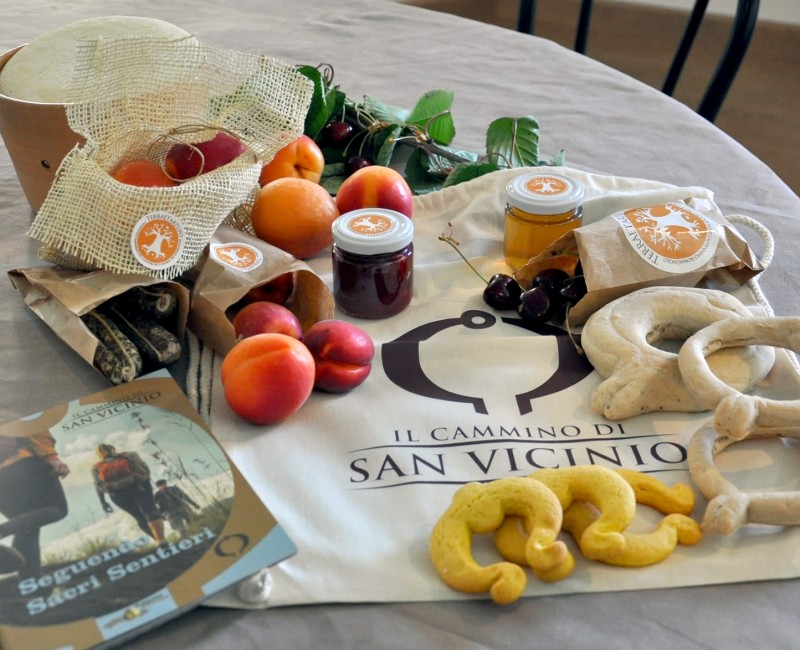
Can the Saint Vicinius Way Also Be an Opportunity to Discover the Flavours of the Apennines?
Absolutely. The Way crosses a vast and varied landscape, from the plains and rolling hills to the highest peaks of our Apennines.
The local cuisine is just as rich and diverse, offering the chance to enjoy mushrooms, truffles, chestnuts, tortelli alla lastra (traditional flatbread pastries), tagliatelle, piadina flatbread with cured meats, formaggio di fossa (pit-aged cheese), fresh fruit and vegetables, and much more. All locally sourced and perfectly accompanied by a glass of excellent local Sangiovese wine.
In short, there is something for every taste.


Leave a Reply
Want to join the discussion?Feel free to contribute!