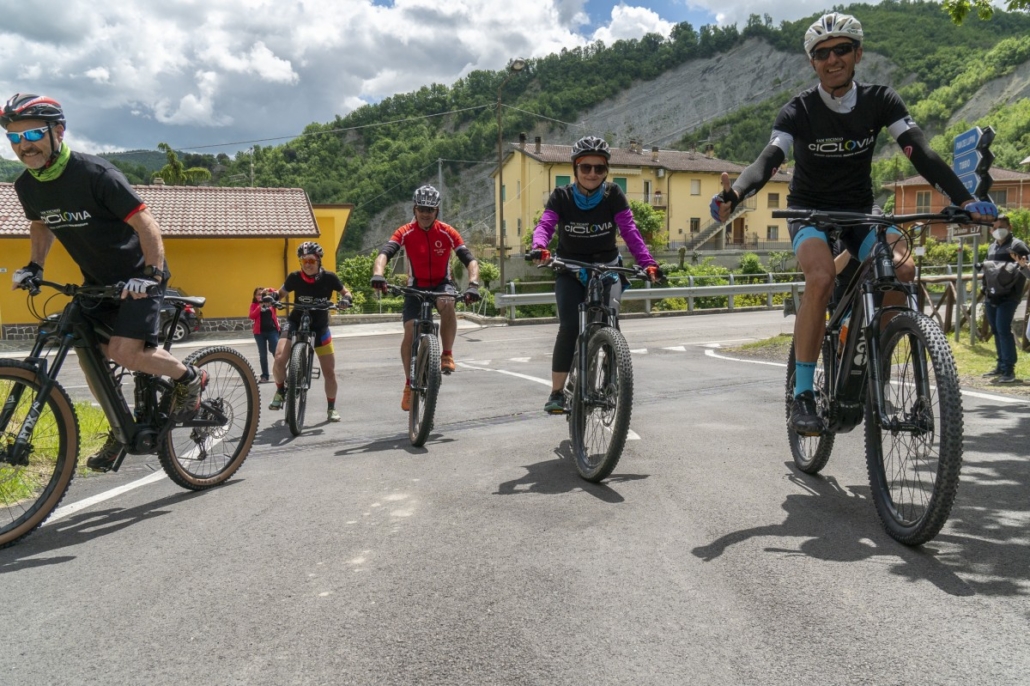
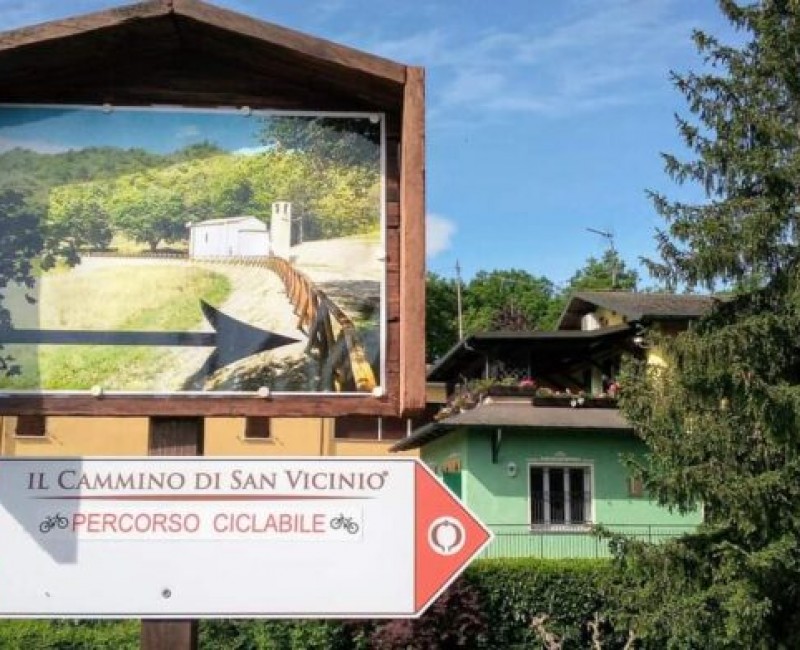
The traditional Cammino di San Vicinio, a walking route of approximately 300 km, was established in 2009 during the celebrations marking the thousandth anniversary of Sarsina Cathedral. Unique in Italy for its distinctive circular layout, the route has now been complemented by a cycle route of the same name, allowing cyclists to explore the same places previously accessible on foot.

The cycling route covers approximately 325 km, with 8,000 metres of elevation gain. Fully signposted and designed to be ridden safely, it is suitable for mountain bikes and gravel bikes, following forest tracks, unpaved roads and quiet tarmac roads.

The San Vicinio Cycle Route can be completed over several days, depending on individual fitness and experience. Along the way, cyclists can stay in charming farm stays, B&Bs, holiday residences and guesthouses, enjoying the warm, personal hospitality traditionally offered to every welcome guest.

The Route Through Romagna and Tuscany

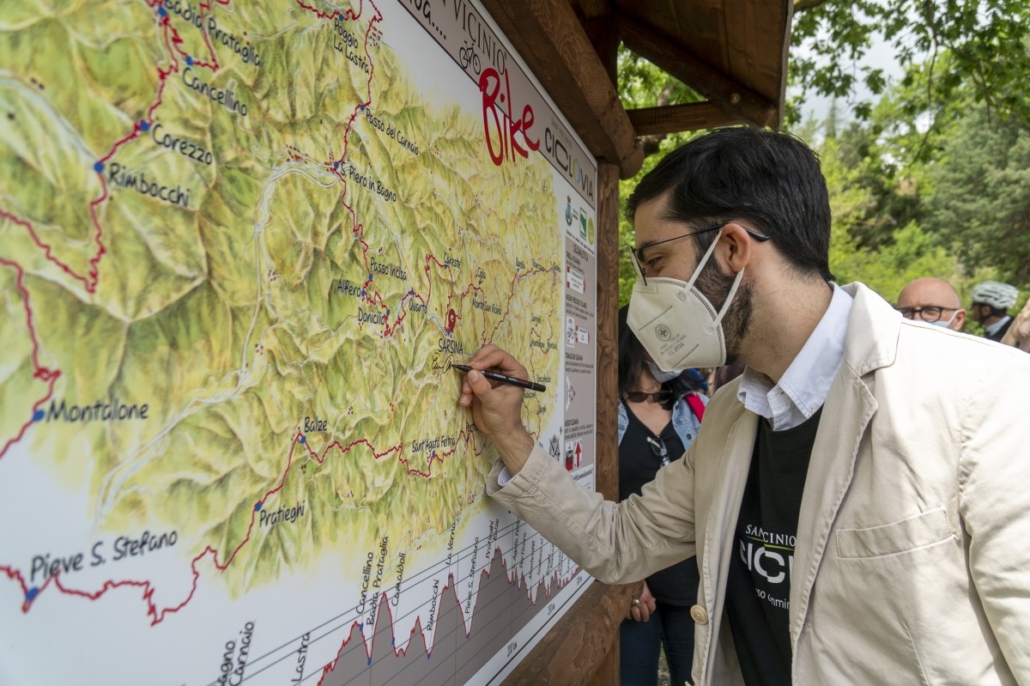
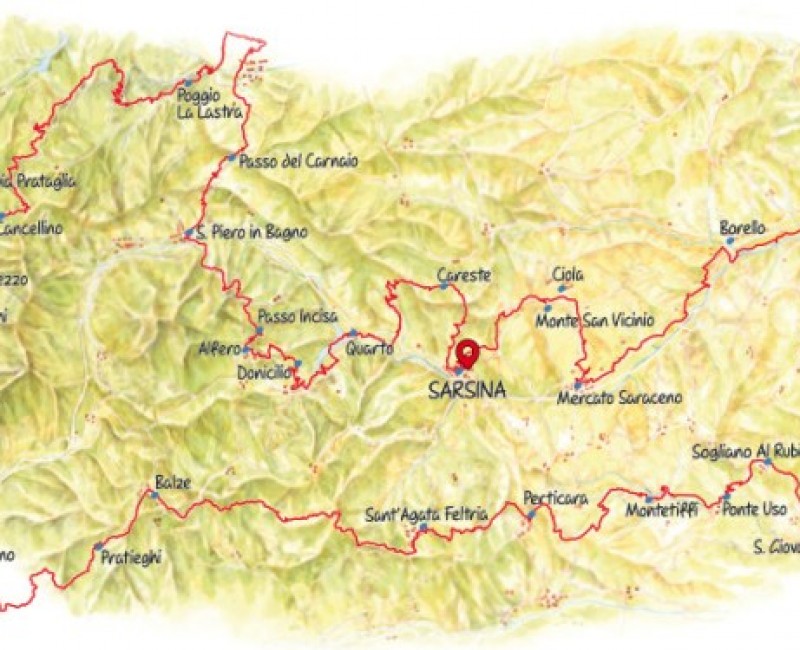
The route starts in Sarsina and reaches Bagno di Romagna, crossing the Casentino Forests National Park. After entering Tuscany, passing through the areas of Camaldoli and La Verna, it returns to Romagna through the municipality of Verghereto. From here, it continues towards the plains around Cesena, crossing the gentle hills of the Upper Rubicone Valley, before returning to Sarsina, the birthplace of the Roman playwright Plautus.

The charming, authentic villages along the route invite cyclists to discover the region’s outstanding culinary traditions and enjoy the peaceful beauty of unspoilt nature.

The Project by the Il Cammino di San Vicinio Association

To support the development of the cycle route as a driving force for tourism in the areas it crosses, the Il Cammino di San Vicinio Association has launched a series of initiatives:

  • Training for cycling guides: in collaboration with its technical partner ASC Forlì-Cesena, the association has provided specialist training for 15 mountain bike guides, who will accompany visitors on safe, experience-based cycling tours.
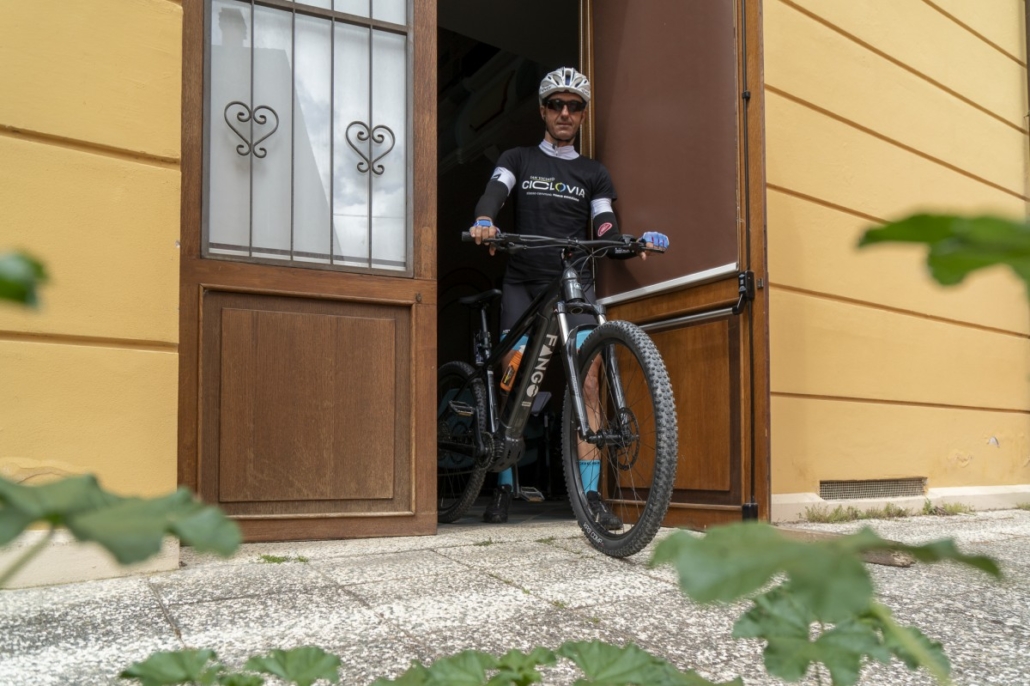
  • E-bike rental: an e-bike rental centre will soon open in the historic centre of Sarsina, the starting and finishing point of the cycle route, in collaboration with two local professionals specialising in the sector.
  • Tourist packages: the first travel packages have been developed and promoted in partnership with tour operators specialising in slow tourism. These include experiences covering the entire cycle route as well as shorter local tours involving accommodation providers in the area.
  • Bike-friendly network: discussions are underway with businesses offering cycling services along the route, with the aim of including them in a network of partner facilities and services.
  • Communication: an extensive social media campaign is scheduled to launch shortly on the Il Cammino di San Vicinio Facebook page and the new Ciclovia San Vicinio Instagram page, in collaboration with the Forlì-based agency Essere Elite. The campaign will also feature a series of evocative videos showcasing the beauty of the region, produced by Achille Matassoni.

We firmly believe that this tourism experience will appeal to the many cycle tourists and outdoor enthusiasts looking for an authentic journey of discovery on a mountain bike or gravel bike. We hope it will also help foster a stronger awareness of the region’s tourism potential and encourage a shared commitment to its development.

Saint Vicinius, it must be said, knew a trick or two when it came to dealing with the devil. With his legendary magical collar, he drove away demons and brought comfort to those in need. Following in the footsteps of the ancient Bishop of Sarsina, we explore historic routes through monasteries and medieval fortresses.

Where Is the Saint Vicinius Way?

The Saint Vicinius Way is a multi-stage walking route, with detours and alternative paths, stretching for approximately 250 kilometres. Most of the route lies in Romagna, with a short section crossing into Tuscany.

The route passes through two protected areas: the Casentinesi Forests National Park and the Nazzano, Tevere-Farfa Regional Nature Reserve.

The route begins and ends in Sarsina, in the province of Forlì-Cesena.

It follows the ancient road network of the Provincia Alpes Appenninae, which for centuries connected the peoples of Northern Europe with the capital of Christianity.

This network of roads linked the area’s most important sanctuaries and provided access to many others through short detours from the main routes.

As with other religious pilgrimage routes, walkers can obtain a certificate documenting their journey, with stamps collected along the way.

Why Is It Called the Saint Vicinius Way?

The route draws inspiration from the life of Vicinius, Bishop of Sarsina from AD 303 to 330, and connects some of the most important medieval religious centres.

Blending history and legend, faith and tradition, the route revolves around the ancient episcopal seat and retraces some of the most significant places associated with the religious and monastic heritage of what is now Emilia-Romagna.

It passes through several places that once formed part of ancient pilgrimage routes, both along the main roads used by pilgrims travelling to Rome and along their secondary branches.

Numerous religious buildings, sanctuaries and churches were established near the principal pilgrimage routes, often becoming destinations just as important as the villages along the main roads.

The Way therefore follows in the footsteps of the Bishop who made Sarsina one of the best-known destinations for pilgrims. Countless legends and traditions grew around him and his cathedral.

The Landscapes and Villages Along the Way

Sarsina: The Magic of a Thousand-Year-Old Town

Sarsina is both the starting and finishing point of the Way, as well as its symbolic heart. It was here that Vicinius served as Bishop, in what was once the most important religious and civic centre in the area.

It is therefore only natural that the heart of Sarsina should be the Cathedral of Santa Maria Annunziata, Sanctuary of Saint Vicinius. Dating back to the Byzantine period, it is one of the most important examples of Romanesque architecture in Italy.

The memory of the saint is everywhere. At the end of the right-hand nave stands the chapel dedicated to him, built in 1755 at the initiative of Bishop Paolo Calbetti.

This is the cathedral’s most sacred place: his relics are preserved beneath the altar, while his collar is kept in the tabernacle.

The collar of Saint Vicinius has long held a special place in the religious traditions of the area. Vicinius was believed to use it for its healing powers and, above all, for exorcisms.

Even today, the faithful are invited to kiss the collar. The saint also appears in the altarpiece depicting the Madonna and Child with the crowned Saint Vicinius, painted by Ippolito Scarsella, known as Scarsellino.

Saint Vicinius also appears in the votive paintings along the walls, created by Michele Valbonesi between 1755 and 1760. Based on a twelfth-century lectionary, they illustrate the most important episodes in the Bishop’s life.

Just outside Sarsina, an even older story is told by the so-called Mausoleum of Obulaccus, a funerary monument from the necropolis of Pian di Bezzo, erected in memory of Aulus Murcius Obulaccus and dating back to the first century AD.

Ancient legends sometimes echo in the names of villages. One example is Verghereto, a small village near Sarsina, whose name is said to derive from the rods used by the monks of the Abbey of St Michael the Archangel to drive away St Romuald, who had attempted to impose the strict rules of the Camaldolese order.

Sant’Agata Feltria: The Spirit of the Middle Ages

From village to village, nature accompanies travellers along the Saint Vicinius Way. Forests, rocky cliffs and great boulders mark the route from Balze towards the Hermitage of Sant’Alberico, whose origins date back to the eleventh century, before reaching Sant’Agata Feltria, a village rich in history and monuments.

Rocca Fregoso, built by the Malatesta family in the fourteenth century and later adapted by the Montefeltro family, gradually evolved from a defensive fortress into a noble residence under the Fregoso family.

The Angelo Mariani Theatre is a small architectural masterpiece and the oldest surviving example in Italy of a theatre built entirely from wood. The original stage and auditorium remain, further embellished in the eighteenth century with balconies.

Also worth visiting are the Baroque Church of San Francesco delle Rose, with its pews decorated with the coats of arms of noble families and an original sixteenth-century holy water font, and the tenth-century Collegiate Church of Sant’Agata.

But the wonders do not end there. Just outside the village stands the sixteenth-century Sanctuary of the Madonna of the Capuchin Friars, which houses Angeloni’s 1786 painting of the Immaculate Conception.

Not far away, in Collina, visitors can cross the Roman bridge that once provided the only connection between Romagna and Montefeltro.

Sogliano al Rubicone: Ancient and Modern Art

The Middle Ages and Renaissance come to life again in Sogliano al Rubicone, a village perched on a rocky outcrop between the valleys of the Rubicone and Uso streams. The small village preserves the seventeenth-century Church of the Suffragio, famous for its gilded wooden altar and the 1575 painting of the Madonna delle Vigne.

Equally unusual and fascinating is the Museum of Arte Povera, with its collections of almanacs, recipes, advertisements, postcards and religious images.

Finally, do not miss what has become the modern symbol of the village: Tonino Guerra’s Butterfly Fountain, together with the Christa Line Museum, which commemorates the tragic events of the Second World War in this corner of Romagna.

Many small treasures can also be found in nearby Monteleone, a village awarded the Orange Flag by the Italian Touring Club, whose castle once hosted the poet Lord Byron.

Sorrivoli: In Caesar’s Footsteps

Also overlooking the Rubicone is Sorrivoli, a hamlet of Roncofreddo. Built around its castle, once accessible only by drawbridge, the village offers a unique panorama of the valley from the terrace within the castle courtyard.

Walking within its walls feels like stepping back into the Middle Ages, among historic buildings and the village’s religious landmark, the Church of Saints Lorenzo and Aldebrando.

Just outside the village, historic churches and settlements follow one another: Calisese, traditionally believed to be the place where Caesar decided to declare war on the Roman Senate; the valley of the Marano stream; and the Abbey of Santa Maria del Monte, a traditional destination for votive offerings since at least the fourteenth century.

Cesena is the largest urban centre along the Way, with its open-air museum of cast-iron street furniture, the Bonci Theatre, the Cathedral of San Giovanni Battista and the extraordinary fifteenth-century Malatestiana Library, which has been exceptionally well preserved.

La Verna and Camaldoli: The Spirituality of the Forest

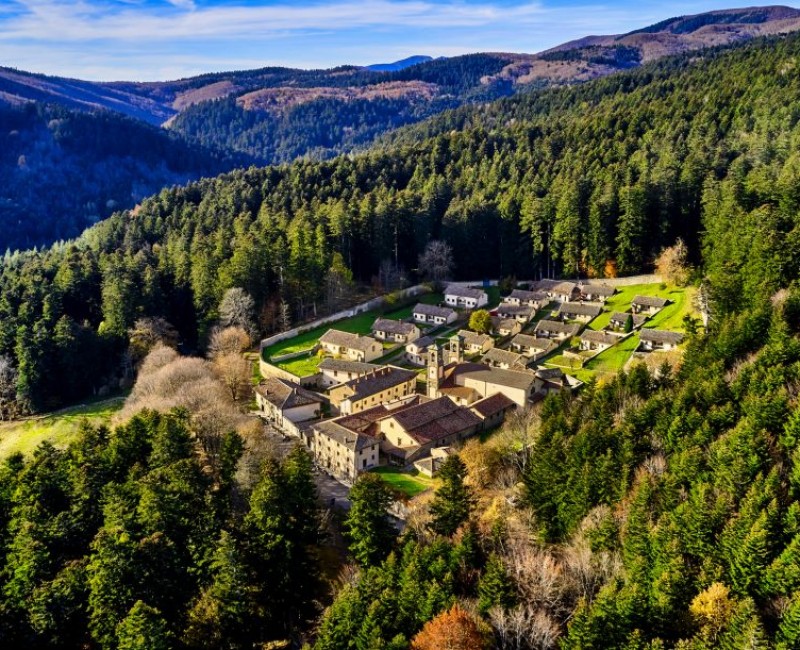
The route also visits two places that symbolise monastic life and spirituality. The Hermitage of Camaldoli is the mother house of the Camaldolese Benedictine order, founded by Saint Romuald in 1024.

Its extensive stone buildings are arranged around the main complex, which houses the guest accommodation, library and historic pharmacy. A beautiful fountain bearing the Camaldolese symbol of two joined doves has stood guard over the entrance for centuries.

The Sanctuary of La Verna, meanwhile, is one of the most important spiritual sites associated with the Franciscan tradition, nestled in the heart of the Casentinesi Forests.

When to Go

The route is at its best from March to October.

Every season has its own beauty: spring brings colourful blossoms, while autumn transforms the forests into a spectacular display of unforgettable colours.

In summer, the many woodland sections offer welcome shelter from the heat.

How to Plan Your Journey

With the exception of the Cesena stage, all the other stages begin and end in small, picturesque villages with limited accommodation.

It is therefore advisable to book accommodation well in advance, especially if you plan to complete several stages or walk the entire route.

Some sanctuaries and monasteries also offer accommodation to pilgrims and visitors, including Camaldoli and La Verna.

How Did the Saint Vicinius Way Come About, and What Kind of Experience Does It Offer?

The Saint Vicinius Way was created during the celebrations marking the thousandth anniversary of Sarsina Cathedral, held between March 2008 and May 2009. The idea came from a joint initiative by local authorities and Father Gabriele Foschi, then the Bishop’s delegate for the Co-Cathedral of Sarsina. They believed that a walking route dedicated to Saint Vicinius would help preserve and strengthen the memory of the miracle-working saint and first Bishop of the birthplace of Plautus.

What Are the Most Scenic Stages of the Way, and How Long Is the Entire Route?

It is a circular route of just over 300 km, starting and finishing in Piazza Plauto in Sarsina. It is divided into 14 stages winding through the Tuscan-Romagna Apennines.

The sites of religious and historical interest along the route are particularly significant. Pilgrims encounter important landmarks of faith, including Sarsina Cathedral, the Hermitage of Camaldoli, the Sanctuary of La Verna, the Hermitage of Sant’Alberico, the Abbey of Santa Maria del Monte in Cesena and the Parish Church of Montesorbo. There are also numerous small chapels and wayside shrines, known locally as “maestà”, which are greatly appreciated by the many pilgrims who follow the Way.

The breathtaking landscapes of the Romagna hills, crowned by fortresses and castles, the sea visible in the distance and the ancient forests of the Casentinesi Forests National Park, are a feast for the eyes and a source of inspiration for every traveller.

The charming villages, artistic heritage and culinary traditions of our region complete the experience, offering everything that lovers of slow tourism could wish for as they explore ancient mule tracks and footpaths, on foot or by bicycle.

What Is the Religious Significance of Saint Vicinius in the Apennines, and How Are Spirituality and the Way Connected?

Saint Vicinius arrived in Sarsina from Liguria around the 5th century AD and spent most of his life in Sarsina and the surrounding hills, preaching the Gospel, embracing poverty, praying, keeping vigil and fasting.

He was ordained Bishop and devoted much of his ministry to freeing those believed to be suffering from demonic influences through prayer and fasting. The people of Sarsina have always been deeply devoted to their patron saint, but his reputation as a miracle worker and exorcist has spread far beyond the local area. Many pilgrims travel from all over Italy to Sarsina to receive his blessing with the distinctive “chain” or “collar” associated with the saint.

The Way draws inspiration from the saint whose name it bears. Hiking itself requires effort and sacrifice, encourages meditation and reflection, and can help travellers find inner peace.

How Can Slow Tourism and Hiking Contribute to the Economy and Promotion of Romagna’s Inland Areas?

The Way is closely connected to the promotion and appreciation of Romagna’s inland areas. Its network of accessible trails encourages a slow, peaceful and contemplative way of travelling, supported by hospitality for pilgrims and numerous family-run accommodation providers where walkers can rest and enjoy a meal.

We hope that, as more people choose to explore the beautiful trails of our extensive territory, the number of services available to those travelling on foot, on horseback or by bicycle will also increase.

Why Are People Rediscovering the Pleasure of Exploring a Region on Foot, and What Opportunities Does the Saint Vicinius Way Offer?

After spending so many months confined to our homes, we have rediscovered the value of being outdoors. We feel the need to reconnect with nature and with the land that has sustained local communities and fed generations of large families.

The search for simplicity, authentic human connections, wholesome food and outdoor activities naturally inspires us to immerse ourselves in a journey that takes us away from everyday life, with the reassurance of following a well-marked and safe route.

Can the Saint Vicinius Way Also Be an Opportunity to Discover the Flavours of the Apennines?

Absolutely. The Way crosses a vast and varied landscape, from the plains and rolling hills to the highest peaks of our Apennines.

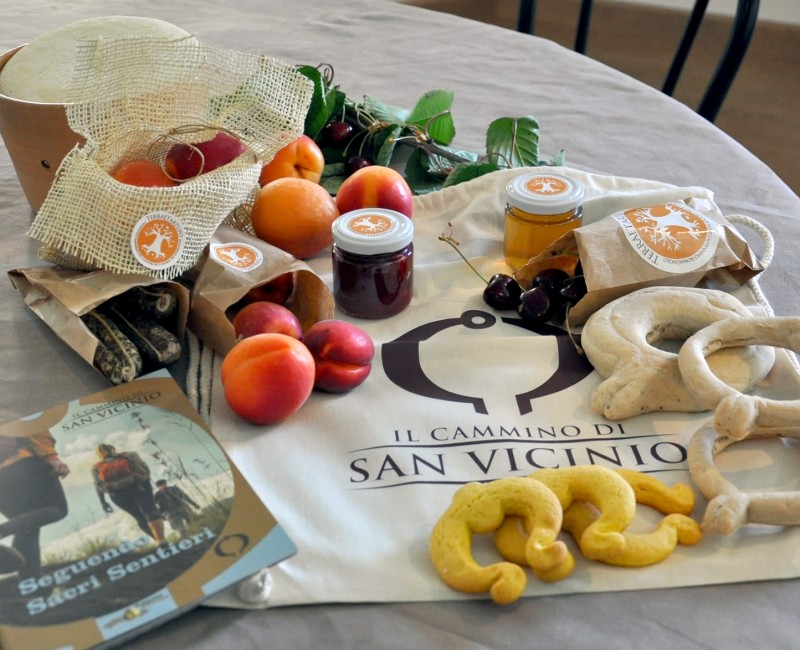
The local cuisine is just as rich and diverse, offering the chance to enjoy mushrooms, truffles, chestnuts, tortelli alla lastra (traditional flatbread pastries), tagliatelle, piadina flatbread with cured meats, formaggio di fossa (pit-aged cheese), fresh fruit and vegetables, and much more. All locally sourced and perfectly accompanied by a glass of excellent local Sangiovese wine.

In short, there is something for every taste.

Exploring Romagna on Foot: A Land of Trails

Places of spirituality surrounded by the splendour of nature.

Walking has a meaning that goes beyond physical effort. Our approach to slow, immersive, experience-based tourism celebrates travel not as a tedious inconvenience to be completed as quickly as possible, but as a genuine exercise in mindfulness.

When we create our own “geography on foot”, immersing ourselves in nature with walking poles in hand, or cycle along quiet country lanes, we enjoy an experience in which physical effort combines with the pleasure of reawakening our senses and carefully observing the landscape and its smallest details.

Walking Trails and Campervan Tourism

A campervan is the perfect adventure companion for exploring on foot or by bicycle. This guide highlights no fewer than 33 locations across the Faenza, Forlì, Cesena and Rimini areas of Romagna, including the Marecchia Valley, where visitors can stop and access one or more of the walking routes crossing these territories.

It also provides contact details for accommodation and hospitality along the way, including farm stays, wineries, B&Bs, countryside inns and traditional restaurants, as well as specialist nature guides with extensive knowledge of the walking routes.

The Eight Walking Routes Across Romagna

Of the walking routes crossing Romagna, six have distinctly religious origins, one is dedicated to Dante’s spiritual experiences between Romagna and Tuscany, while the eighth is something of a sanctuary for nature lovers and outdoor enthusiasts: the Alta Via dei Parchi.

Also known as Trail 00 / GEA, the Alta Via follows the Tuscan-Romagna Apennine ridge, forming a watershed to the south-west of the other seven routes and providing a natural reference point for their interconnected paths between Passo della Calla and La Verna.

From here, the pilgrimage route beginning at the Hermitage of Montepaolo continues towards Assisi, while the Via Romea Germanica carries on towards Rome.

The Sacred Forests Trail

Along the Alta Via dei Parchi, 90 kilometres of forest tracks and ancient mule paths stretch between Lake Ponte near Tredozio and the Franciscan Sanctuary of La Verna, following the ridge through the Casentinesi Forests National Park.

This route embodies the connection between nature and spirituality so profoundly that it has become known as the “Sacred Forests Trail”.

For now, we can already enjoy walking alone, and by the end of the month we may once again be able to share the experience with others. Let us prepare for these journeys into nature, a true “mystery in broad daylight”!

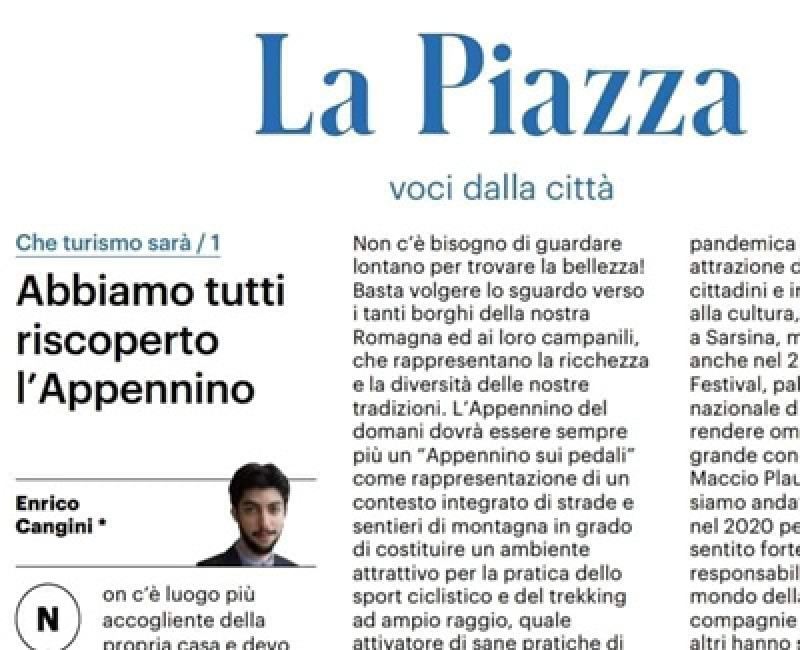
Non c’è luogo più accogliente della propria casa e devo dire che questa emergenza pandemica ci ha riportato al piccolo, al locale, alla comunità, ai suoi luoghi e alle sue peculiarità. Un effetto che si è visto in maniera dirompente nel turismo, che è tornato a essere di prossimità, portando le persone a riscoprire il proprio territorio e le bellezze che lo abitano.

Non c’è bisogno di guardare lontano per trovare la bellezza! Basta volgere lo sguardo verso i tanti borghi della nostra Romagna e ai loro campanili, che rappresentano la ricchezza e la diversità delle nostre tradizioni.

Un Appennino da vivere in bicicletta e a piedi

L’Appennino del domani dovrà essere sempre più un “Appennino sui pedali”, come rappresentazione di un contesto integrato di strade e sentieri di montagna in grado di costituire un ambiente attrattivo per la pratica dello sport ciclistico e del trekking ad ampio raggio, quale attivatore di sane pratiche di vita e di rigenerazione del tessuto sociale.

In questo senso abbiamo lavorato, proprio in questi mesi, a rendere ciclabile il Cammino di San Vicinio, che verrà inaugurato a breve. La bici costituisce la metafora del cambiamento atteso e di un nuovo cambio di passo che deve collocare i nostri territori in una prospettiva post pandemica competitiva e di attrazione di turisti, nuovi cittadini e imprese.

Cultura e territorio: il Plautus Festival

In merito alla cultura, nel nostro piccolo, a Sarsina, metteremo in scena anche nel 2021 il Plautus Festival, palcoscenico di rilievo nazionale di teatro classico, per rendere omaggio al nostro più grande concittadino, Tito Maccio Plauto.

Con coraggio siamo andati in scena anche nel 2020 perché abbiamo sentito forte il senso di responsabilità nei confronti del mondo della cultura e delle compagnie teatrali che più di altri hanno subito il distanziamento sociale e le restrizioni dovute alla pandemia.

Questa fase di riflessione forzata, però, sono sicuro darà slancio alla fantasia e alla creatività del mondo culturale italiano, che va supportato e sostenuto come settore strategico della nostra rinascita.

È pur vero che dopo la peste ci fu il Rinascimento!

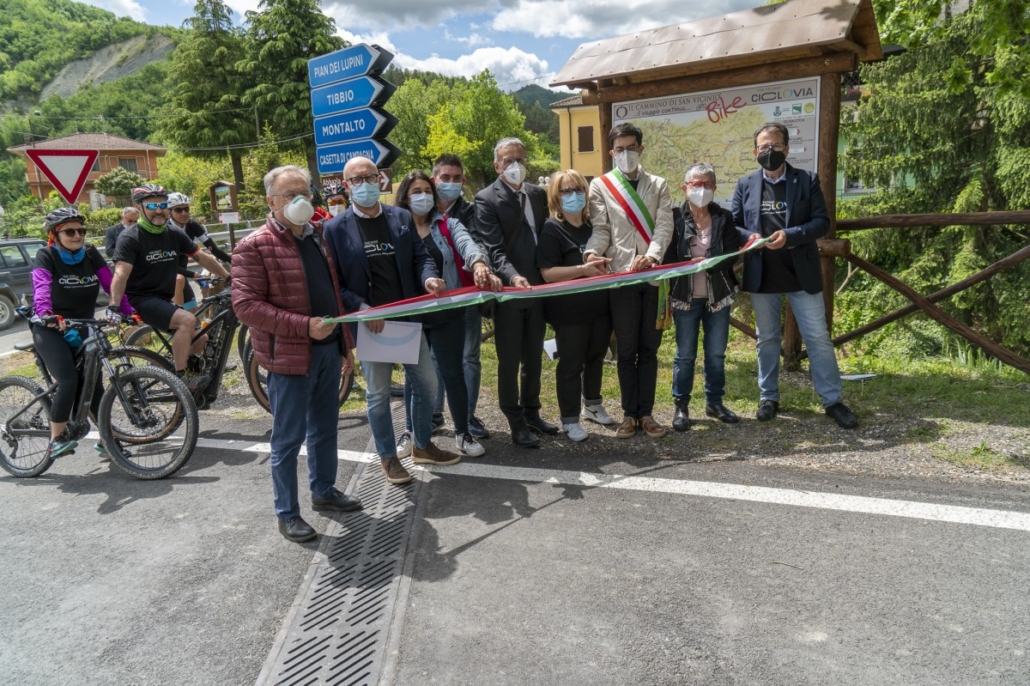
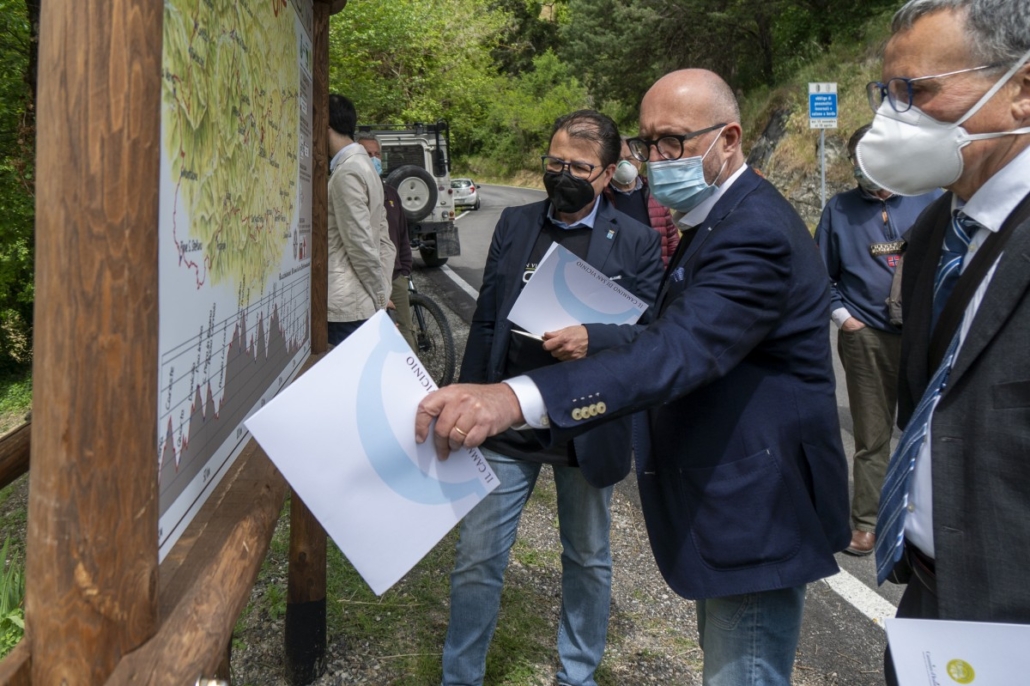
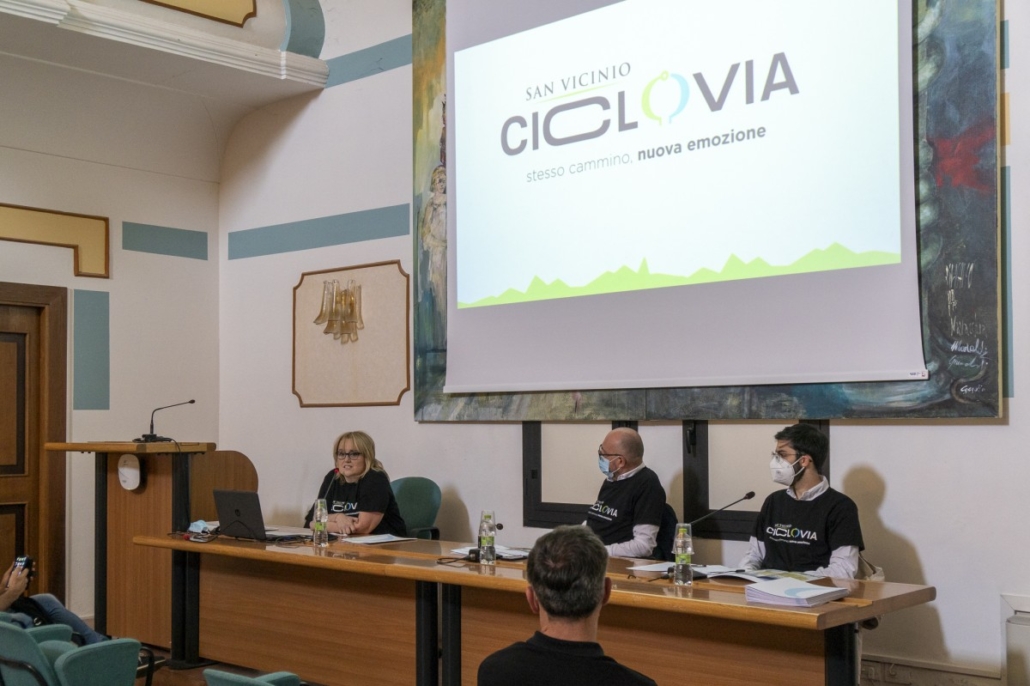
“Ciclovia San Vicinio. Stesso cammino, nuova emozione” è il messaggio promotore del progetto presentato questa mattina nel centro culturale di Sarsina.

Proprio dalla città che ha dato i natali a Plauto e nella cui Cattedrale sono custodite le spoglie mortali del santo taumaturgo Vicinio parte e arriva la ciclovia, che in gran parte ripercorre il Cammino di San Vicinio, inaugurato in occasione delle celebrazioni millenarie della Basilica Concattedrale di Sarsina, negli anni 2008 e 2009.

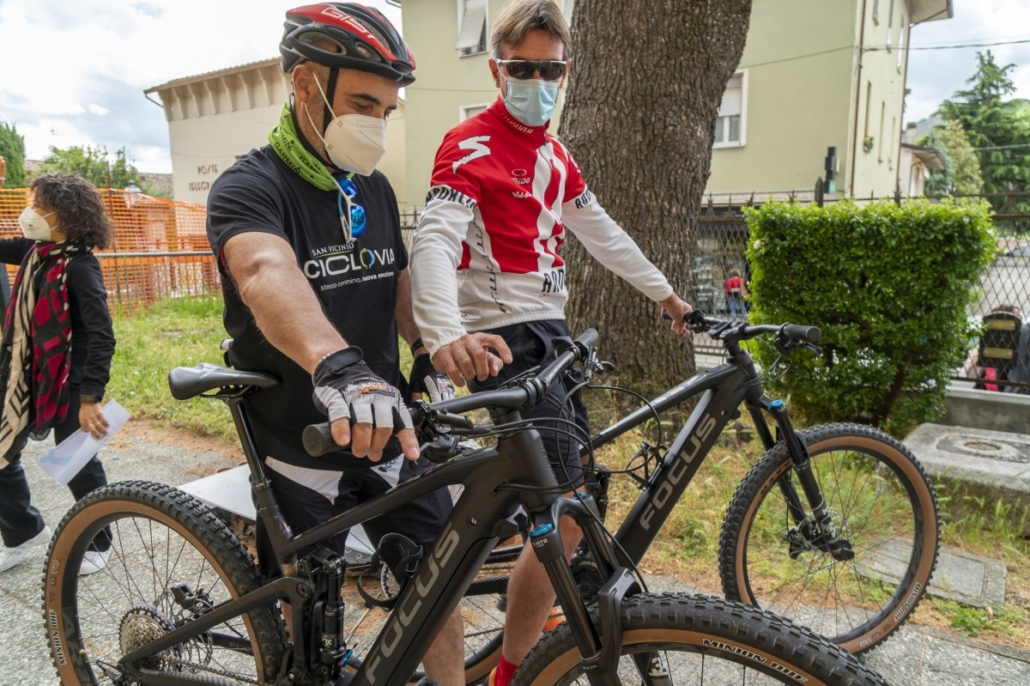
Un Cammino, quindi, che si rende fruibile anche per gli appassionati delle due ruote, mountain bike o le sempre più gettonate e-bike. Il percorso ciclabile è lungo 325 chilometri (300 i chilometri del Cammino), per un dislivello di 8.000 metri, tutto tabellato e fruibile in sicurezza. Si sviluppa su piste forestali, strade sterrate o asfaltate a bassa percorrenza.

Il percorso della Ciclovia di San Vicinio

La O del logo della Ciclovia riprende l’immagine stilizzata del collare di San Vicinio, utilizzato per la benedizione dei pellegrini nella cappella di San Vicinio, nella navata di destra della Basilica Concattedrale.

Il cammino ad anello, con partenza e arrivo da Sarsina, raggiunge Bagno di Romagna, entra nel territorio delle Foreste Casentinesi, conduce ai luoghi sacri di Camaldoli e La Verna, per poi rientrare in territorio romagnolo attraverso Verghereto e le Balze. Scende quindi verso Sant’Agata Feltria e, attraverso il territorio del Rubicone nei comuni di Borghi e Montiano, raggiunge Cesena, per poi risalire da Mercato Saraceno.

Quello di San Vicinio rientra tra i circa 100 cammini che percorrono il territorio italiano. Nel suo percorso si interseca con la Via Romea-Germanica, recentemente riconosciuta “Rotta culturale europea”.

Un nuovo modo di vivere il territorio

“Sempre più spesso negli ultimi anni ci veniva chiesto se il Cammino di San Vicinio era fruibile anche per le bike”, ha spiegato Cristina Santucci, da quattro anni presidente dell’associazione Cammino di San Vicinio. “E la risposta era un sì tiepido. In parte, ma non del tutto. Abbiamo raccolto la sfida, sullo slancio delle sempre maggiori richieste di aprire il territorio a un turismo slow, da vivere e conoscere nelle sue bellezze naturali e nell’incontro delle persone con le loro storie da raccontare e tradizioni da testimoniare”.

“Chi sceglie il Cammino di San Vicinio ha spesso motivazioni spirituali. Con questa nuova proposta ci rivolgiamo ai cicloturisti che desiderano conoscere un territorio unico per le sue caratteristiche naturalistiche, culturali e legate alla tradizione. E all’incontro con le persone che lo abitano, nella ricettività e fruibilità in sicurezza. Abbiamo trovato grande risposta tra i vari soggetti, pronti a fare di nuovo rete per un progetto che valorizza la coscienza turistica del territorio”.

Accompagnatori, noleggio e Credenziale del ciclista

Sono una quindicina gli “ambasciatori” formati per accompagnare e guidare i turisti in tour esperienziali in sicurezza, per un progetto nato in collaborazione con il partner tecnico ASC Forlì-Cesena.

Anche i servizi tecnici legati alla manutenzione e alla fruizione delle biciclette sono in fase di implementazione: a giorni aprirà a Sarsina un negozio di assistenza e noleggio e-bike, gestito da Michele Bubbolini e Ivan Monti.

Per tutti, è già stampata la “Credenziale del ciclista”, pronta a essere timbrata lungo il percorso.

Il turismo lento come opportunità per Sarsina

“Fare escursioni in bici elettrica, divertendosi e conoscendo meglio il territorio, è un’opportunità che siamo chiamati a cogliere ora che l’attenzione verso il nostro territorio, dal punto di vista turistico, è tornata alta”, ha dichiarato il sindaco di Sarsina Enrico Cangini.

“Dobbiamo trovarci pronti a intercettare un turismo amante di nuove scoperte e nuove emozioni in sella alle due ruote. Con il lockdown abbiamo apprezzato di più le bellezze del nostro territorio e ora siamo pronti a proporlo a beneficio di tutti”.

“È sempre più importante veicolare le energie di tutti, pubblico e privato, per creare un’economia circolare che dia reddito, con il coinvolgimento cosiddetto ‘dal basso’, dei volontari. Ne è un esempio la Badia di Montalto, edificio di proprietà del Comune, pochi chilometri sopra a Sarsina: un gruppo di cittadini, uniti in associazione, ne hanno manifestato grande affetto e desiderio di recupero. In pochi anni sono stati intercettati dei finanziamenti europei grazie ai quali sono stati fatti importanti interventi di ristrutturazione e conservazione. Un esempio virtuoso da seguire”.

Il sindaco ha ricordato anche la nascita del Cammino di San Vicinio: “Questo progetto di ciclovia è un rilancio importante del progetto nato all’interno delle celebrazioni millenarie. Celebrazioni guidate da don Gabriele Foschi, che recentemente è tornato vicino alla nostra comunità come esorcista. Incarico che per diversi anni ha portato avanti don Fiorenzo Castorri con passione e partecipazione”.

Il sito e la comunicazione della Ciclovia

In concomitanza con l’inaugurazione della ciclovia parte una campagna di comunicazione social sulle pagine Facebook e Instagram.

Da oggi è attivo il sito www.cicloviadisanvicinio.it, dove sono caricati video curati da Achille Matassoni che in pochi minuti riassumono le caratteristiche del percorso tra natura, cultura, storia e tradizioni, a contatto diretto con il territorio e le persone che lo animano.

Un racconto in cui “la Basilica (di San Vicinio) è cattedrale naturale e chiesa di pietra, nei luoghi dove il pensiero trova il suo spazio, sui passi di San Vicinio”.

Il tradizionale Cammino di San Vicinio, lungo circa 300 chilometri, nato durante le celebrazioni del Millenario della Cattedrale di Sarsina nel 2009 e unico in Italia per la sua peculiare forma circolare, si arricchisce dell’omonima Ciclovia di San Vicinio, che permette di attraversare gli stessi luoghi raggiunti a piedi pedalando in sella alla bicicletta.

Il percorso ciclabile, lungo circa 325 chilometri con 8.000 metri di dislivello, completamente tabellato e fruibile in totale sicurezza, è percorribile con MTB o gravel e si sviluppa su piste forestali, strade sterrate e asfaltate a bassa percorrenza.

La Ciclovia di San Vicinio si potrà percorrere in più giorni, a seconda della preparazione e dell’allenamento personale, soggiornando in deliziosi agriturismi, B&B, residence e foresterie, con l’accoglienza familiare che si riserva a ogni ospite di riguardo.

Il percorso tra Romagna e Toscana

Il percorso parte da Sarsina, raggiunge Bagno di Romagna, attraversa il Parco delle Foreste Casentinesi e, dopo uno sconfinamento in Toscana tra Camaldoli e La Verna, ritorna in Romagna nel comune di Verghereto, per poi raggiungere la pianura del Cesenate attraversando le dolci colline dell’Alto Rubicone e fare ritorno nella città plautina di Sarsina.

I borghi caratteristici e autentici lungo il percorso condurranno i cicloamatori ad apprezzare le eccellenze culinarie e il piacere di immergersi nel verde silenzio della natura incontaminata.

Il progetto dell’Associazione Il Cammino di San Vicinio

L’Associazione Il Cammino di San Vicinio, per sostenere il progetto della ciclovia, che si propone di essere un volano turistico per i territori attraversati, ha messo in campo una serie di azioni propedeutiche.

  • Formazione degli accompagnatori: in collaborazione con il partner tecnico ASC Forlì-Cesena, ha provveduto a dare una formazione specifica a 15 accompagnatori per escursioni in mountain bike, che avranno il compito di guidare i turisti in tour esperienziali in totale sicurezza.
  • Noleggio e-bike: a breve verrà inaugurato un punto di noleggio e-bike in pieno centro storico a Sarsina, punto di partenza e di arrivo della Ciclovia, in collaborazione con due privati professionisti del settore.
  • Pacchetti turistici: sono stati promo-commercializzati i primi pacchetti turistici, con tour operator specializzati nel turismo slow, sia sull’intera ciclovia sia localmente con alcune delle strutture ricettive presenti sul territorio.
  • Rete bike-friendly: sono in corso contatti con le strutture che offrono servizi bike lungo la ciclovia, con lo scopo di inserirle nella rete di convenzioni.
  • Comunicazione: è stata predisposta una massiccia campagna social sulla pagina Facebook Il Cammino di San Vicinio e sulla nuova pagina Instagram Ciclovia San Vicinio, insieme alla realizzazione di video emozionali che raccontano le peculiarità del progetto.

L’auspicio è che questo prodotto turistico possa essere appetibile per i tanti cicloturisti e amanti dell’outdoor che desiderano compiere un viaggio esperienziale in sella a una mountain bike o a una bici gravel, diventando un ponte verso la creazione di una vera coscienza turistica del territorio.

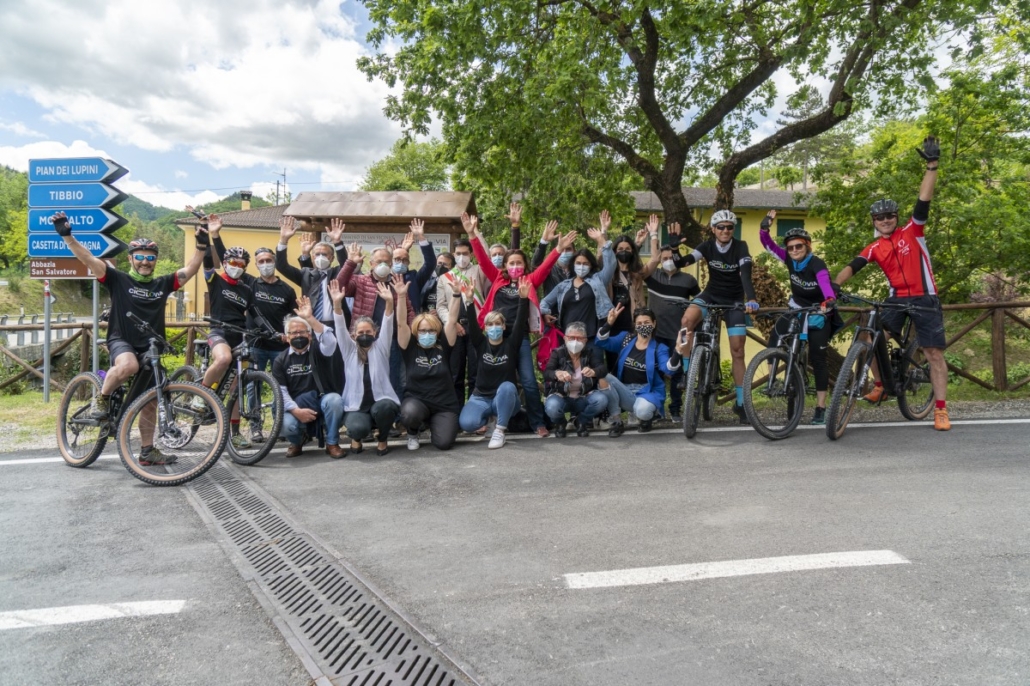
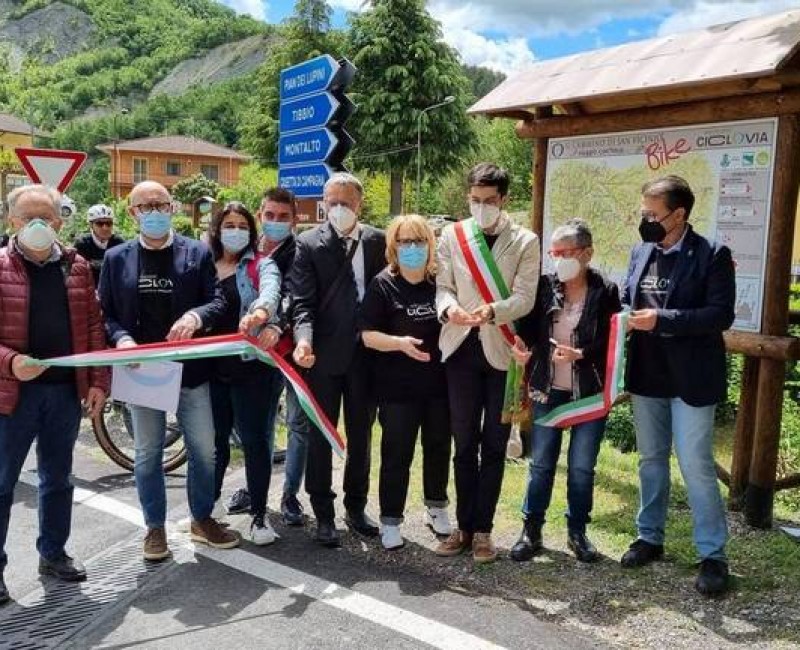
È stata inaugurata nei giorni scorsi la Ciclovia di San Vicinio, legata all’omonimo cammino nato nel 2009 durante le celebrazioni del millenario della Cattedrale di Sarsina.

L’iniziativa permette di fruire anche in bicicletta dei luoghi che è possibile raggiungere a piedi lungo un itinerario che ha la peculiarità di essere di forma circolare.

Il tracciato ciclistico è di 325 chilometri, con 8.000 metri di dislivello, ed è percorribile con mountain bike e gravel. Si sviluppa su piste forestali, strade sterrate e strade asfaltate a bassa percorrenza.

Il percorso della Ciclovia di San Vicinio

La ciclovia parte e arriva a Sarsina dopo aver toccato Bagno di Romagna, attraversato il Parco delle Foreste Casentinesi con Camaldoli e La Verna, raggiunto Pieve Santo Stefano e da lì Pratieghi, prima di tornare in Romagna dalle Balze di Verghereto e raggiungere la pianura del Cesenate attraverso l’Alto Rubicone.

Lungo il percorso, fruibile in più giorni, è possibile soggiornare in agriturismi, bed and breakfast, residence e foresterie.

Il progetto e i servizi per i cicloturisti

Promotrice dell’iniziativa è l’associazione Il Cammino di San Vicinio, che per sostenere il progetto della ciclovia ha formato 15 accompagnatori per escursioni in mountain bike.

L’associazione ha inoltre predisposto un punto di noleggio e-bike nel centro di Sarsina, che verrà attivato a breve, ha avviato la commercializzazione dei primi pacchetti turistici e sta contattando le strutture che offrono servizi bike lungo il percorso per attivare convenzioni.

È stata inoltre programmata una massiccia attività di comunicazione sui social.

Pieve Santo Stefano posto tappa del tratto toscano

Il tratto toscano del percorso vede Pieve Santo Stefano come posto tappa.

“Un’occasione di promozione notevole, visti gli alti numeri che realizza il turismo soprattutto della riviera, sempre più invogliato a sperimentare esperienze innovative come questa”.

Così l’assessore Luca Gradi, che spiega anche come sia allo studio, insieme agli organizzatori della ciclovia, una deviazione verso l’eremo di Cerbaiolo, già tappa importante dei Cammini di Francesco.

“Potenziare il nuovo turismo lento sul quale la Valtiberina ed il Comune di Pieve Santo Stefano stanno puntando molto per la ripartenza”.

This site is registered on wpml.org as a development site. Switch to a production site key to remove this banner.